
Winter Fence Care Checklist for Colorado Springs | DIY Guide
To protect your Colorado Springs fence in winter, maintain a 12-inch clear zone beneath bottom rails by shoveling away heavy snowdrifts, avoid piling snow from driveways against pickets, steer clear of corrosive chemical de-icers (magnesium chloride) near fence posts, and adjust gate latches to accommodate up to 1.5 inches of winter frost heave.
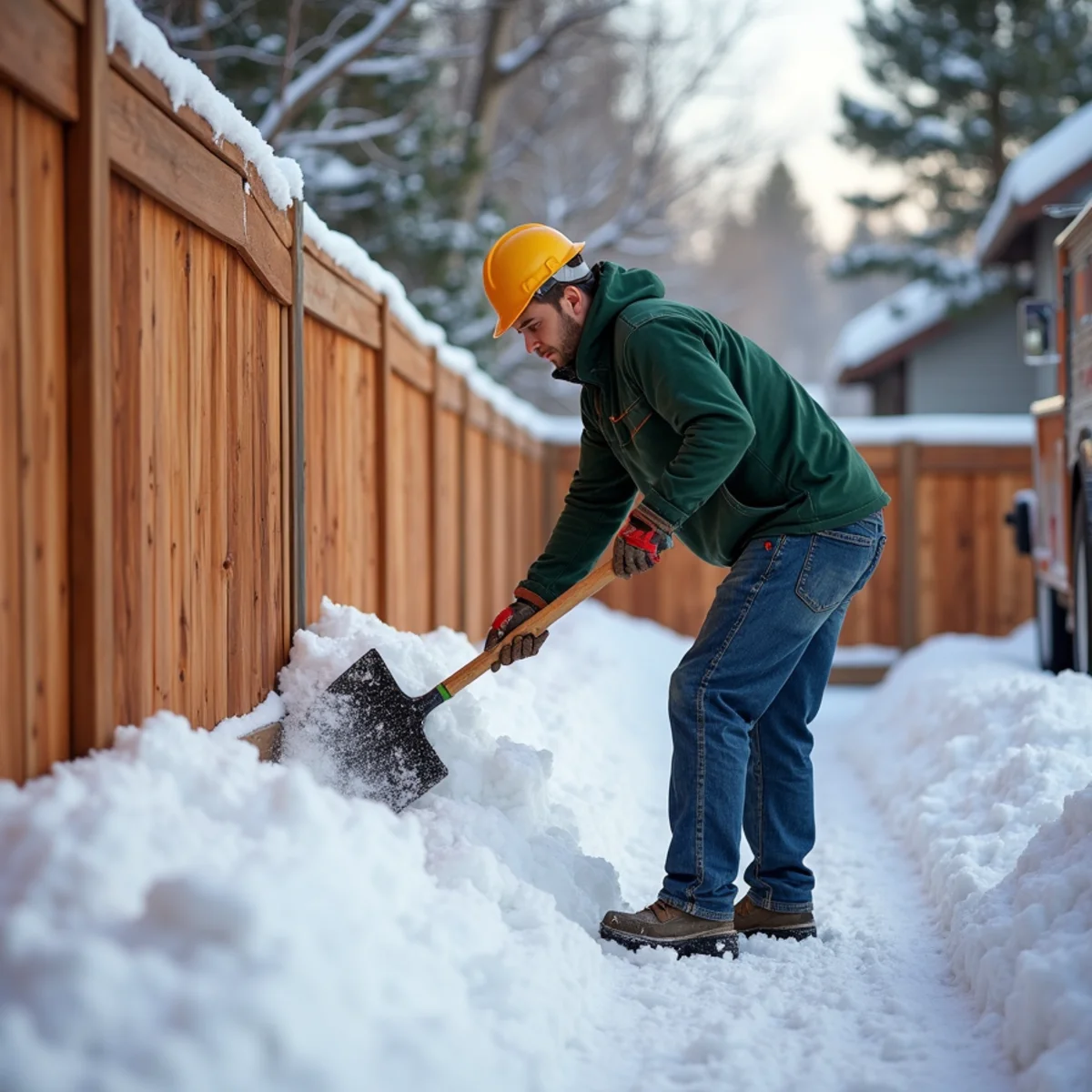
Field Insight on Snowdrift Moisture Retention and Rot
When heavy Front Range snowdrifts accumulate 3 feet deep against a wooden privacy fence, melting snow sits against the bottom rails for weeks during alternating sunny days and freezing nights. This constant wet-freeze cycle saturates cedar end-grain, stripping away protective stain and accelerating fungal decay faster than three years of summer rain.
Guide Outline: Winter Fence Care Checklist for Colorado Springs | DIY Guide
- 1.Managing Winter Snow Drifts: Protecting Bottom Rails from Rot
- 2.Frost Heave Mitigation: How Subterranean Ice Crystals Lift Fence Footings
- 3.De-Icing Salt Hazards: Preventing Chemical Degradation of Wood and Metal
- 4.Gate Ground Clearance Adjustments for Snowpack and Soil Swell
- 5.Post-Freeze Visual Audit: Checking Boundary Alignment After Major Thaws
- 6.Frequently Asked Questions
Managing Winter Snow Drifts: Protecting Bottom Rails from Rot
Heavy Front Range winter storms regularly dump 12 to 24 inches of wet, heavy snow across El Paso County. As downslope winds blow across open terrain in neighborhoods like Falcon, Monument, and Cimarron Hills, snow forms massive drifts against the windward side of residential privacy fences.
Allowing snowdrifts to sit banked against wooden pickets creates severe structural and biological issues. A 3-foot snowdrift exerts hundreds of pounds of outward dead-load pressure against horizontal framing rails. As sunny 50°F afternoon temperatures melt the top layer, water percolates downward into the snowpack, creating a slushy ice dam that envelops the bottom rails.
Once a week following major winter storms, use a plastic snow shovel to gently clear a 12-inch breathing channel between the fence and deep snowbanks, allowing sunlight and air circulation to keep lumber dry.
Questions Regarding winter fence care colorado springs?
Call Jeremy directly for veteran-owned technical guidance on Front Range fencing.
| Snow Management Practice | Impact on Fence Health | Material Affected | Recommended Frequency |
|---|---|---|---|
| Banked Snowbanks (> 2 ft) | Traps moisture; causes rail sag and rot | Wood & Vinyl | Clear within 48 hours of storm |
| Driveway Snowblower Piling | Concentrated weight bends pickets | All materials | Never blow driveway snow onto fence |
| Ice Damming at Post Base | Water freezes in post fissures, splitting wood | Wood Timbers | Keep post collars clear of packed ice |
| 12-Inch Air Buffer Channel | Allows rapid drying during sunny thaws | All materials | Maintain throughout winter months |
Frost Heave Mitigation: How Subterranean Ice Crystals Lift Fence Footings
Frost heave is one of the most powerful geological forces acting on residential fencing along the Front Range. When moisture in the soil freezes, it expands by approximately 9% in volume, forming subterranean ice lenses.
In El Paso County, the municipal frost line penetrates 20 to 24 inches deep during severe winters. If a builder took shortcuts and set fence posts only 16 to 18 inches deep, the expanding ice beneath the footing exerts upward hydraulic pressure, lifting the entire 150-pound concrete plug upward out of the ground.
Once the ground thaws in spring, the post does not settle back into its original position; it tilts sideways into loose muddy soil. If your fence suffered frost heave, the only permanent cure is excavating the footing and resetting the post below the 24-inch frost line.
Action Checklist:
- Verify your fence posts are anchored minimum 24 inches deep below the frost line
- Ensure concrete footings feature a bell-shaped base that resists upward soil heave
- Divert roof gutter downspouts away from fence post lines to minimize soil moisture
- Grade landscape beds so winter snowmelt drains away from boundary perimeters
De-Icing Salt Hazards: Preventing Chemical Degradation of Wood and Metal
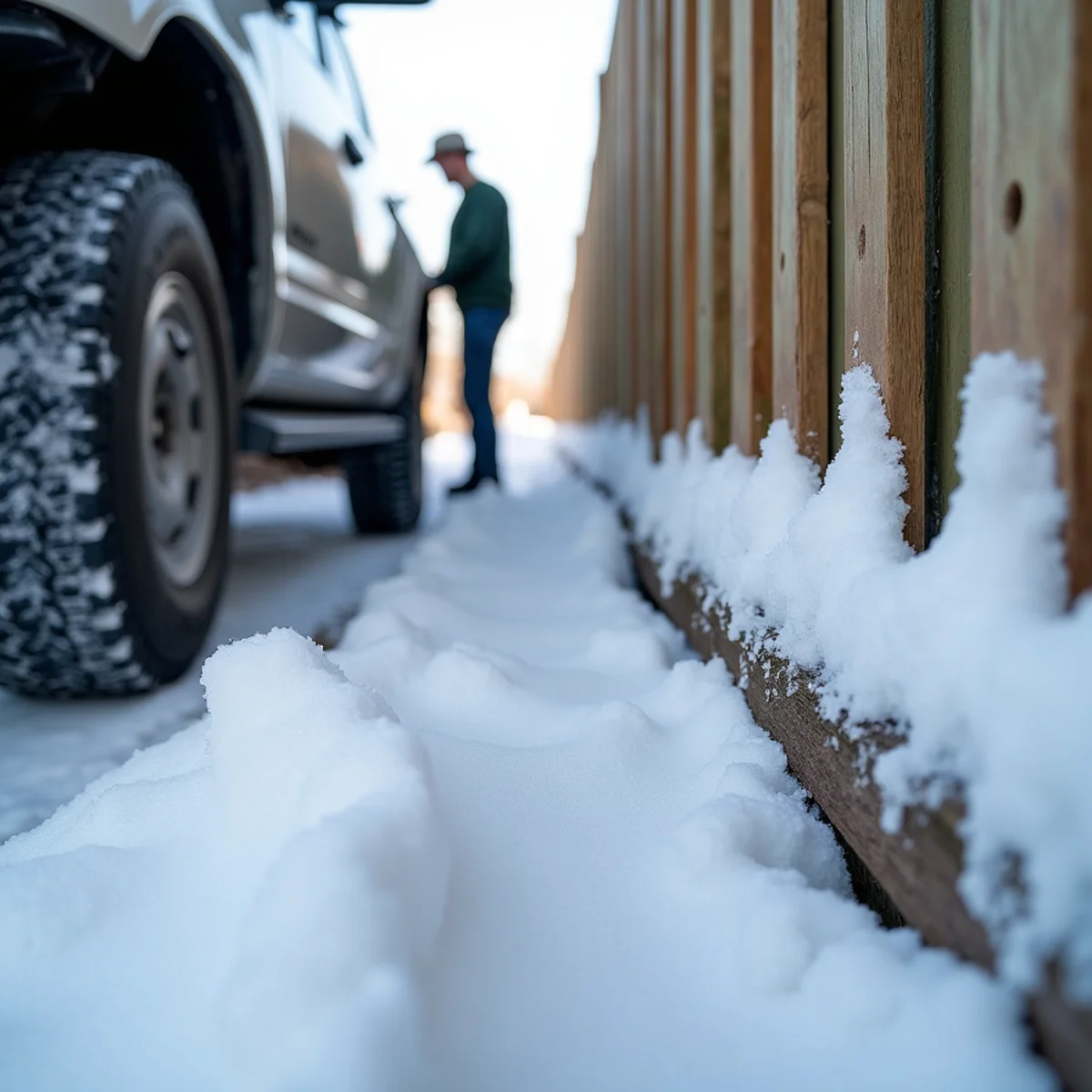
To clear icy driveways and sidewalks, Colorado Springs homeowners frequently apply chemical de-icers like rock salt (sodium chloride), calcium chloride, or magnesium chloride. While effective on ice, these chemicals are catastrophic for fencing materials.
When salt-laden slush is shoveled or kicked against fence posts, the chemical salts dissolve into the wood cell structure. Once absorbed, salt crystals draw moisture out of the wood fibers, causing severe cellular dehydration, wood fiber fuzzing, and rapid fastener corrosion.
On metal and ornamental iron fences, de-icing salts strip powder coatings and accelerate galvanic rust. Never shovel salted sidewalk snow against fence posts; use non-corrosive traction sand or plain kitty litter near fence lines instead.
| De-Icer Chemical Type | Corrosion Risk to Fasteners | Damage to Wood Fibers | Safe for Fence Proximity? |
|---|---|---|---|
| Rock Salt (Sodium Chloride) | Severe (rapid rust on steel) | Dehydrates wood cells; white staining | No — keep 5 ft away from fence |
| Magnesium Chloride | Extreme (attacks zinc & aluminum) | Accelerates grain fuzzing and rot | No — highly corrosive to hardware |
| Calcium Magnesium Acetate (CMA) | Low to Moderate | Minimal impact on wood fibers | Acceptable in moderate amounts |
| Coarse Traction Sand / Grit | Zero corrosion risk | Zero chemical impact; provides grip | Best practice around fence posts |
Gate Ground Clearance Adjustments for Snowpack and Soil Swell
Have you ever found yourself trapped in your backyard in January because the gate refused to open? In Colorado Springs, winter gate freeze-up is caused by two factors: soil swell and snowpack compaction.
As clay soils freeze, the ground beneath your gate walkway can expand upward by 1 to 1.5 inches. If your gate was built with a tight 1-inch summer ground clearance, the bottom of the gate will bind firmly against frozen dirt or flagstone pavers.
Ensure your gate has minimum 2.5 to 3 inches of bottom clearance before winter arrives. If you have adjustable J-bolt hinges, you can easily raise the gate height 1 inch for the winter months by adjusting the top hinge nuts with a wrench.
Action Checklist:
- Check bottom gate clearance: ensure minimum 2.5 inches of space above pavers
- Shovel snow clear of the gate swing path after every storm before it turns to ice
- Apply dry graphite lubricant to gate latch mechanisms—avoid water-attracting oils
- Adjust hinge nuts to raise gate slightly if winter ground swell occurs
Post-Freeze Visual Audit: Checking Boundary Alignment After Major Thaws
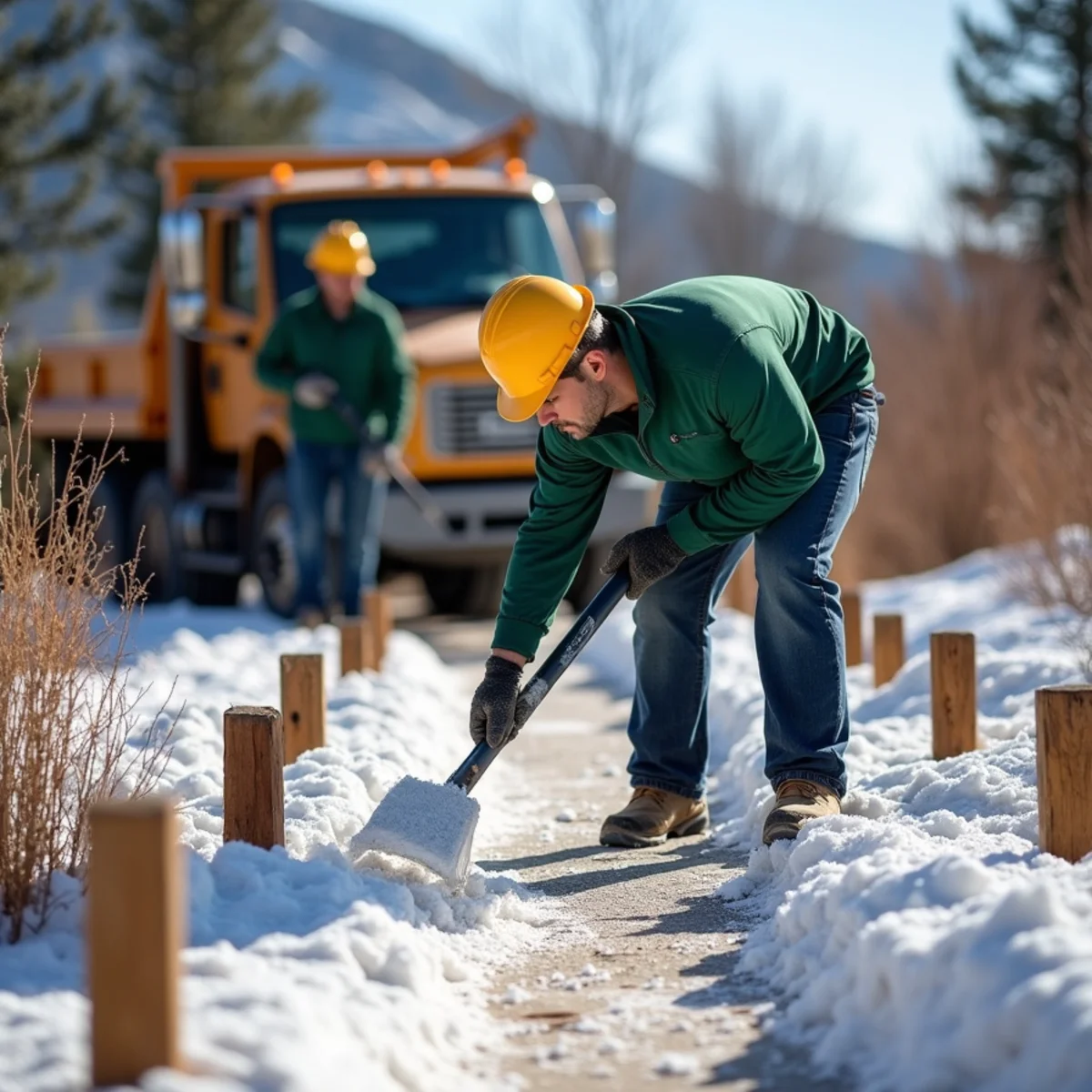
Colorado Springs is famous for dramatic mid-winter thaws. A 10°F blizzard is often followed three days later by a bright 60°F sunny afternoon. These rapid freeze-thaw cycles place immense physical strain on fence posts.
Conduct a brief visual walk of your perimeter during major mid-winter thaws. Look down the top rail line to verify the fence remains straight and plumb. Check for cracked post collars, loose ceramic screws, or split pickets.
Catching small winter misalignments early allows you to install temporary braces or tighten fasteners before the next high-wind storm can exploit the weakness. If you discover leaning posts or damaged sections, call Jeremy at (614) 543-4232 for dependable winter service.
| Post-Thaw Visual Sign | Probable Winter Cause | Contractor Recommended Action |
|---|---|---|
| Post leaning outward by 2+ inches | Frost heave lifted footing in saturated soil | Install temporary brace; schedule spring reset |
| Bottom rail bowing downward | Heavy snowbank dead-load settled on rail | Clear snow; reinforce rail with center kicker block |
| Gate latch out of alignment | Ground heaved beneath hinge or strike post | Realign striker plate or adjust J-bolt hinge nuts |
| Pickets pulling away from rail | Ice expanded behind boards, popping fasteners | Drive 3-inch exterior ceramic screws into rails |
Frequently Asked Questions
Yes. Heavy snowbanks trapped against wooden pickets hold moisture against the lumber during sunny melt cycles, leading to protective stain failure, mold, and accelerated wood rot.