
Does Vinyl Fence Crack in Colorado Springs Winters?
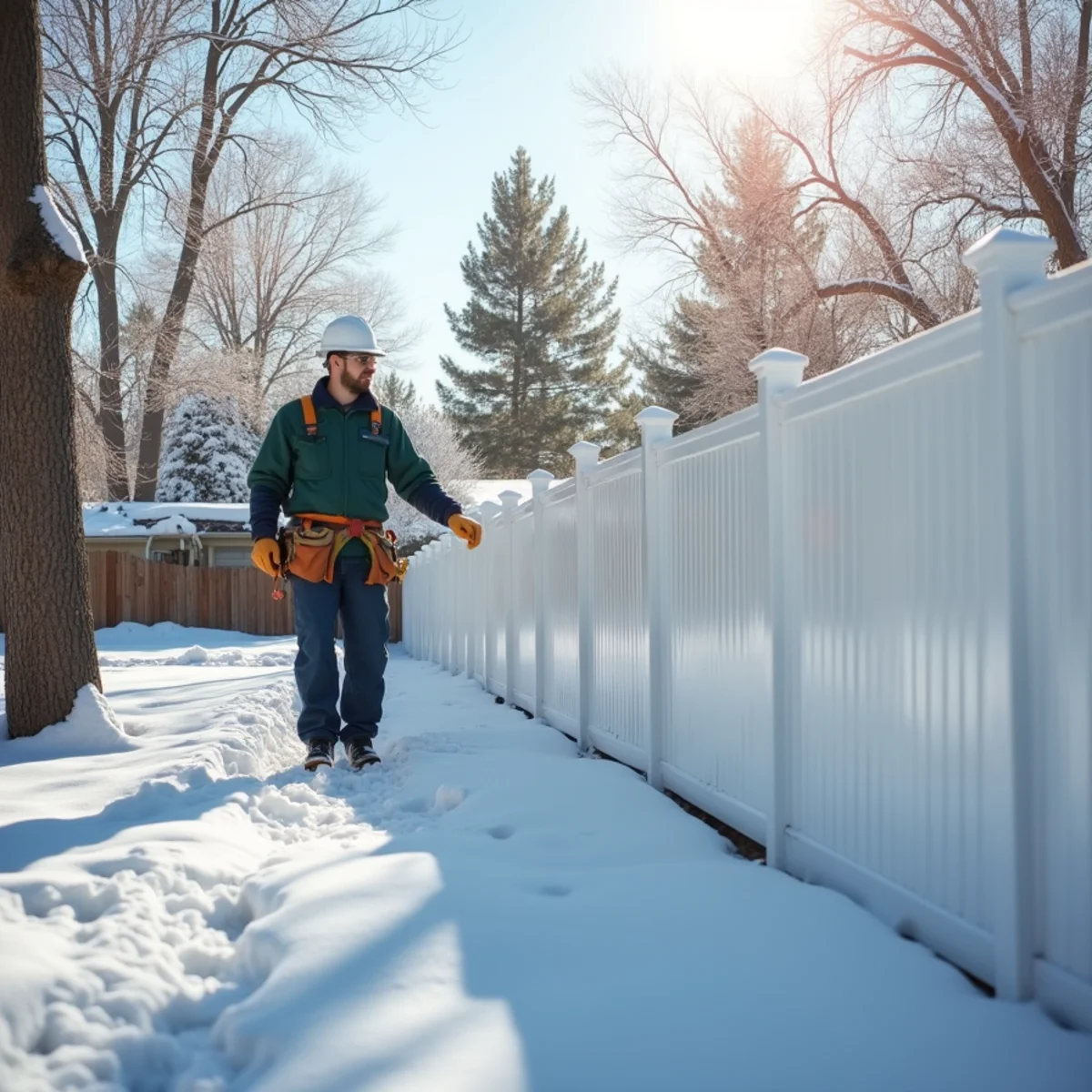
High-quality virgin vinyl fencing does not crack on its own during Colorado Springs winters, but sub-zero temperatures (-10°F to -25°F) make PVC rigid and brittle, dramatically lowering its impact tolerance. Impacts from heavy snowplow discharge, thrown ice, or lawn equipment that cause no harm in summer can shatter winter vinyl instantly.
Field Insight on Thermal Contraction Expansion Gaps
Polyvinyl chloride (PVC) expands and contracts significantly more than wood—up to 1/4 inch per 8-foot rail between a 95°F July afternoon and a -10°F January night. If a contractor nails or screws vinyl rails tightly into post pockets without expansion tolerances, the rail has nowhere to shrink, resulting in cracked post routings or snapped internal tabs.
Guide Outline: Does Vinyl Fence Crack in Colorado Springs Winters?
- 1.PVC Molecular Behavior at Sub-Zero High-Altitude Temperatures
- 2.Thermal Expansion Mechanics: Calculating Rail Contraction Across Seasons
- 3.Preventing Cold-Snap Shatter: Managing Snowplow and Lawn Care Impacts
- 4.The Role of Titanium Dioxide UV Inhibitors in Extreme Sun and Freeze Cycles
- 5.Vinyl vs. Wood Winter Survivability: Honest Engineering Trade-Offs
- 6.Frequently Asked Questions
PVC Molecular Behavior at Sub-Zero High-Altitude Temperatures
Polyvinyl chloride (PVC) is a thermoplastic polymer engineered with chemical plasticizers and impact modifiers to give the material structural elasticity. However, like all plastics, PVC has a glass transition temperature. When ambient temperatures drop below 20°F along the Front Range, the polymer chains stiffen, reducing the material's ability to flex under mechanical stress.
In Colorado Springs, sub-zero cold snaps frequently arrive on the heels of warm 60°F Chinook wind days. This rapid temperature drop (sometimes plunging 40 degrees in four hours) causes the outer PVC profile to contract rapidly.
High-quality modern vinyl fencing manufactured with virgin PVC resin and acrylic impact modifiers easily withstands static winter freeze cycles without spontaneous cracking. The primary danger during winter is kinetic impact while the material is in its cold-brittle state.
Questions Regarding vinyl fence cold weather colorado springs?
Call Jeremy directly for veteran-owned technical guidance on Front Range fencing.
| Temperature Range | PVC Physical State | Impact Tolerance | Homeowner Precautions |
|---|---|---|---|
| Warm Season (60°F – 95°F) | Flexible & resilient | High (resists balls, weed trimmers) | Standard maintenance only |
| Chilly Season (32°F – 59°F) | Slightly stiffened | Moderate (avoid heavy tool strikes) | Clear fall leaves from post collars |
| Sub-Freezing (0°F – 31°F) | Rigid polymer state | Reduced (lawn trimmers will chip edge) | Do not lean heavy ladders against rails |
| Severe Cold (-20°F – -1°F) | Cold-brittle threshold | Low (shatters under sharp shock) | Keep snowblower discharge directed away |
Thermal Expansion Mechanics: Calculating Rail Contraction Across Seasons
One of the most critical engineering principles in vinyl fence construction is calculating seasonal thermal movement. Unlike wood, which expands when wet and shrinks when dry, vinyl movement is driven entirely by temperature changes.
An 8-foot horizontal vinyl rail expands and contracts approximately 1/4 inch across an 80-degree temperature swing. On a 160-foot fence line, total cumulative movement across the run can exceed 5 full inches between mid-summer and mid-winter.
To accommodate this natural breathing without structural failure, posts must be manufactured with precision CNC-routed pockets that allow horizontal rails to slide inward and outward freely. Locking tabs on rail ends must have sufficient clearance within the post cavity so they do not bottom out or pull completely out of the socket during sub-zero contraction.
Action Checklist:
- Confirm fence posts feature routed pocket holes, not surface-mounted brackets
- Ensure rail ends have minimum 1/2-inch insertion depth inside post pockets
- Never drive screws through vinyl rails directly into post pockets (prevents sliding)
- Check that bottom rail has drainage weep holes to let condensation escape
Preventing Cold-Snap Shatter: Managing Snowplow and Lawn Care Impacts
Because vinyl becomes brittle in extreme cold, winter breakage is almost universally caused by exterior physical force. In suburban neighborhoods like Briargate, Stetson Hills, and Falcon, snow removal equipment is the number one cause of winter vinyl damage.
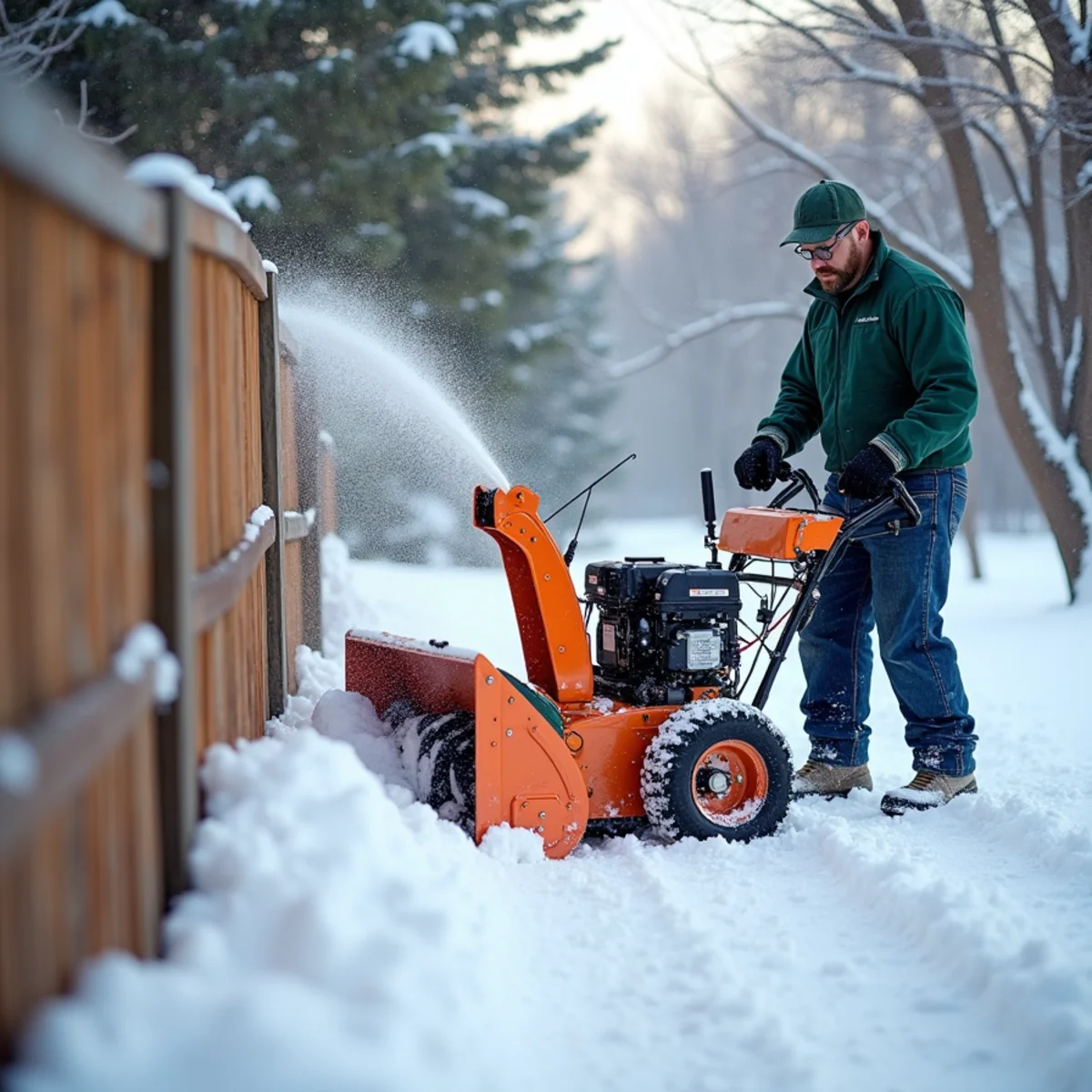
When municipal snowplows or residential snowblowers throw heavy, compacted snow and street slush against a cold vinyl fence, the concentrated kinetic weight can punch clean holes through vertical infill pickets. Similarly, shoveling high snowdrifts against the bottom rail creates outward hydraulic pressure as snow freezes and expands.
Maintain a minimum 12-inch buffer when operating snowblowers near vinyl boundaries, and instruct family members to avoid leaning heavy metal sleds, ladders, or garbage cans against cold fence panels.
| Winter Activity / Equipment | Failure Risk Level | Specific Damage Mechanism | Best Prevention Practice |
|---|---|---|---|
| Snowblower Chute Discharge | Severe | Heavy packed ice/slush punches pickets | Direct discharge chute parallel to fence |
| Street Snowplow Windrow | High | Lateral snow weight pushes posts out of plumb | Install snow markers 3 ft off curb line |
| Metal Snow Shovel Edge | Moderate | Sharp shovel tip chips brittle bottom rail | Use plastic snow shovels along fence lines |
| Children Sledding / Ball Play | Moderate | Point-impact fractures cold vinyl face | Establish a safe winter play zone |
The Role of Titanium Dioxide UV Inhibitors in Extreme Sun and Freeze Cycles
Colorado Springs sits at 6,035 feet elevation, exposing building materials to 20% to 25% more intense ultraviolet (UV) radiation than sea-level locations. High UV radiation degrades plastics through photo-oxidation, breaking chemical polymer bonds and turning cheap vinyl yellow, chalky, and paper-brittle within three years.
To survive high-altitude Colorado winters, vinyl fencing must be formulated with high concentrations of titanium dioxide (TiO2). Titanium dioxide functions like industrial sunscreen: it reflects UV wavelengths before they can penetrate and degrade the PVC polymer matrix.
Jeremy's Fences installs exclusively commercial-grade, co-extruded virgin vinyl containing minimum 10 parts titanium dioxide per 100 parts resin, ensuring our fences retain their flexibility and pure white or almond finish for decades.
Action Checklist:
- Select commercial co-extruded virgin vinyl—never cheap recycled regrind vinyl
- Verify the vinyl specification contains minimum 10 phr (parts per hundred) TiO2
- Look for ASTM F964 compliance certifications on material spec sheets
- Avoid budget dark brown vinyl unless formulated with acrylic capstocks
Vinyl vs. Wood Winter Survivability: Honest Engineering Trade-Offs
Choosing between vinyl and Western Red Cedar for a Colorado Springs property requires an honest evaluation of winter trade-offs. Neither material is completely impervious to mountain weather.
Vinyl excels in moisture resistance: snowdrifts piled against vinyl will never induce wood rot, mold growth, or paint peeling. Once spring arrives, melting snow washes off harmlessly. However, vinyl cannot be repaired easily board-by-board; if an infill picket cracks, an entire 8-foot section often requires disassembly.
Western Red Cedar offers superior natural impact resilience in sub-zero cold: a thrown rock or heavy snow shovel impact that shatters cold vinyl will merely dent cedar. However, cedar requires ongoing staining to prevent moisture absorption and frost splitting.
Call Jeremy directly at (614) 543-4232 for an honest assessment of which material best fits your property.
| Performance Factor | Commercial Virgin Vinyl | Western Red Cedar Privacy |
|---|---|---|
| Sub-Zero Impact Resistance | Low (becomes brittle < 10°F) | High (wood grain absorbs impact shock) |
| Snowpack Moisture Resistance | Immune (zero rot or water uptake) | Vulnerable if unstained (soaks snow moisture) |
| Windstorm Flexibility | Requires steel post stiffeners | Naturally flexes; high shear resistance |
| Post-Storm Repair Ease | Requires full panel disassembly | Simple: unscrew single board and swap |
| Winter Maintenance Required | Zero maintenance needed | Clear heavy wet drifts away from rails |
Frequently Asked Questions
A soft snowball will not harm vinyl. However, a hard ice ball or dense slush chunk thrown by a snowblower can crack cold-brittle vinyl pickets when temperatures drop below 10°F.