
Prep Your Fence for Colorado Springs' Windy Season
To prepare your fence for Colorado Springs wind season, perform the 'post wobble test' at every post to catch ground-line rot early, replace smooth popped nails with 3-inch exterior ceramic star-drive screws, reinforce gate latch strike plates, and trim overhanging tree branches that create whipping hazards during 80-mph Chinook wind events.
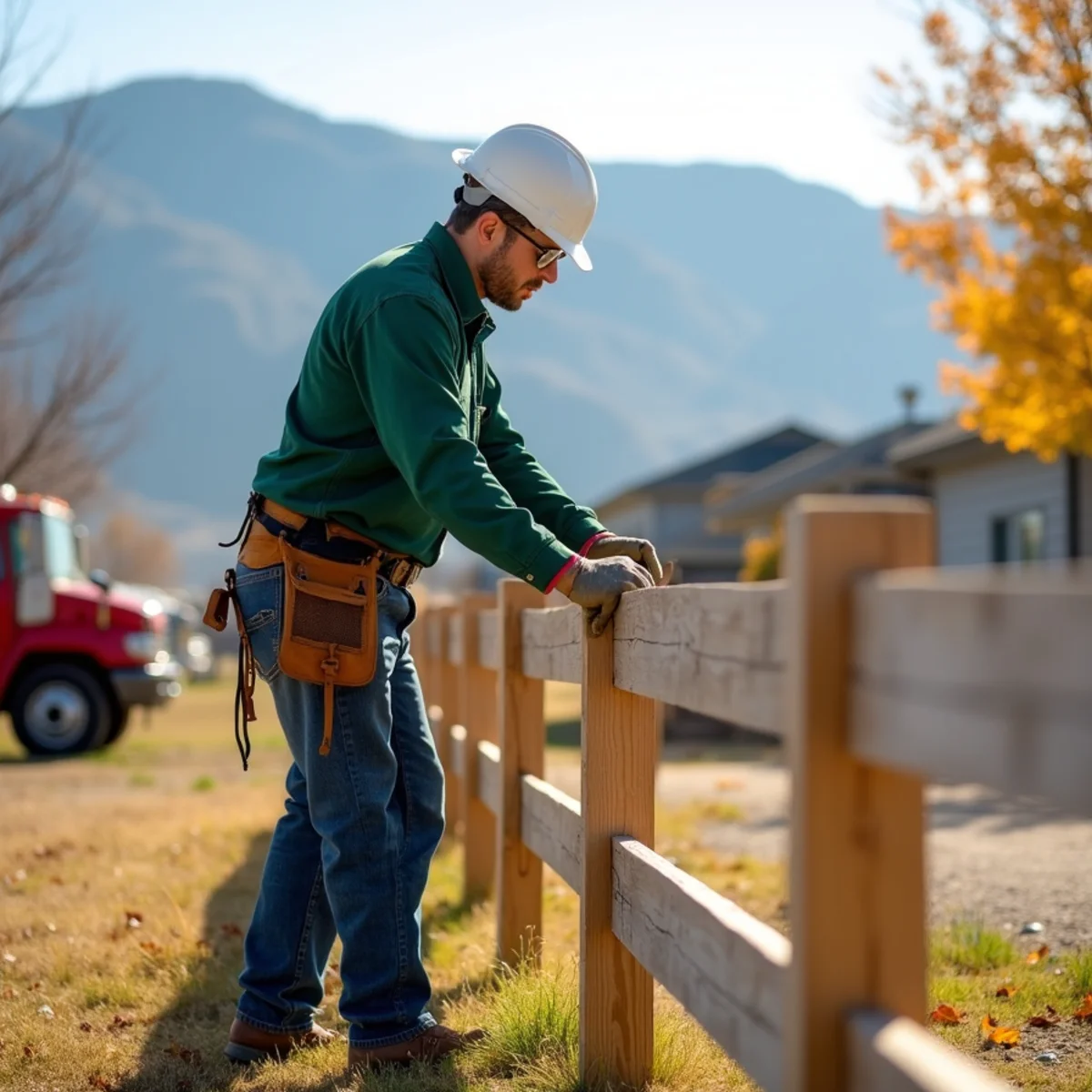
Field Insight on the Wind Dynamic of Solid Privacy Walls
A standard 6-foot solid cedar privacy fence acts as a massive 150-foot sail. In an 80-mph Front Range gust, that sail generates over 450 pounds of continuous lateral force on every single post. If a post footing has even 1/2 inch of loose soil travel or 20% wood rot, the mechanical leverage will snap it at ground level.
Guide Outline: Prep Your Fence for Colorado Springs' Windy Season
- 1.The Front Range Wind Season: Downslope Chinook Dynamics and Sail Load
- 2.The 30-Second Post Wobble Test: Detecting Subterranean Base Failure
- 3.Fastener Audit: Replacing Popped Nails with Heavy Ceramic Structural Screws
- 4.Gate Latch Reinforcement: Preventing Wind Blowouts and Hinge Distortion
- 5.Vegetation Management: Clearing Windbreak Hazards and Overhanging Limbs
- 6.Frequently Asked Questions
The Front Range Wind Season: Downslope Chinook Dynamics and Sail Load
Colorado Springs features one of the most intense wind regimes in North America due to its unique mountain-plains topography. Downslope windstorms (Chinook winds) occur when stable air masses are forced over the 14,000-foot Rampart Range and Pikes Peak, accelerating downward into the urban valley below.
Wind season peaks twice annually: early spring (March through May) and late fall (November through December). During these events, localized wind funnels develop along east-west arterial canyons and open corridors like Highway 24, Woodmen Road, and Powers Boulevard, producing sustained 50-mph winds with localized gusts exceeding 80 mph.
A solid 6-foot wood privacy fence captures immense wind energy. Because the pickets fit tightly together, wind cannot bleed through the barrier; it pushes against the wall like a dam against rising floodwaters. Taking proactive fortification measures in February and October prevents devastating property collapses.
Questions Regarding prep fence for wind season colorado springs?
Call Jeremy directly for veteran-owned technical guidance on Front Range fencing.
| Wind Velocity Range | Lateral Wind Pressure (PSF) | Force per 8-Ft Fence Panel | Structural Vulnerability |
|---|---|---|---|
| Moderate Gusts (30–45 mph) | 4.0 – 8.5 lbs / sq ft | 190 – 400 lbs lateral thrust | Causes loose gates to slam and rattle |
| Strong Gales (50–65 mph) | 10.0 – 16.5 lbs / sq ft | 480 – 790 lbs lateral thrust | Pops smooth builder nails out of rails |
| Chinook Storms (70–85 mph) | 19.0 – 28.0 lbs / sq ft | 910 – 1,340 lbs lateral thrust | Snaps rotted 4x4 posts at ground level |
| Extreme Gusts (90+ mph) | 32.0+ lbs / sq ft | 1,500+ lbs lateral thrust | Overturns shallow concrete footings |
The 30-Second Post Wobble Test: Detecting Subterranean Base Failure
The single most critical diagnostic you can perform prior to wind season is the Post Wobble Test. This simple 30-second physical audit identifies weakened posts before wind shear snaps them.
Walk to each fence post, grip the post firmly at chest height with both hands, and apply aggressive back-and-forth lateral rocking force. A structurally sound post set 24 inches deep in 100 lbs of commercial concrete will feel completely rigid—giving zero ground deflection.
If the post flexes more than 1/2 inch at ground level, observe the soil collar. If the wooden post moves inside the concrete, the wood has rotted internally. If the entire concrete plug rocks inside the earth, soil erosion or frost heave has compromised the footing. Mark failing posts with blue painter's tape for immediate stabilization.
Action Checklist:
- Perform the wobble test on every single post along your boundary
- Inspect ground collar with an awl to probe for spongy fungal rot below grade
- Check whether concrete footing has lifted out of the ground from winter frost
- Pay extra attention to corner and terminal gate posts which bear dynamic loads

Fastener Audit: Replacing Popped Nails with Heavy Ceramic Structural Screws
Builder-grade fences in Colorado Springs are almost universally assembled using pneumatic nail guns firing smooth wire nails. In our arid climate (relative humidity regularly dropping below 15%), lumber dries, shrinks, and swells.
As the wood moves, smooth nails lose their friction grip and begin backing out of horizontal rails. When an 80-mph gust slams the fence, suction created on the leeward side pops loose pickets completely free, sending heavy cedar boards flying through neighborhood yards.
Conduct a fastener audit along every run. Pull out popped nails with a claw hammer or pry bar, and drive heavy 3-inch exterior ceramic-coated star-drive (Torx) screws directly into the framing rails. Screws have deep aggressive threads that bite into the wood fibers, providing over 300% greater withdrawal resistance.
| Fastener Type | Withdrawal Resistance | Performance in High Winds | Contractor Recommendation |
|---|---|---|---|
| Smooth Wire Finish Nails | Low (50 – 80 lbs) | Pops loose easily during 50-mph gusts | Unacceptable for Front Range fences |
| Ring-Shank Galvanized Nails | Moderate (120 – 160 lbs) | Resists light wind; rusts over time | Marginal builder-grade standard |
| Ceramic Structural Screws | Extreme (350 – 500 lbs) | Zero pullout under 85-mph Chinook gusts | Veteran Standard (lifetime guarantee) |
| Through-Bolts with Washers | Maximum (800+ lbs) | Indestructible connection for gate hinges | Required for heavy gate frameworks |
Gate Latch Reinforcement: Preventing Wind Blowouts and Hinge Distortion
Gates represent the primary failure point during Front Range windstorms. When high winds hit a privacy gate, loose latches rattle and pop open. Once a gate blows open, it swings wildly on its hinges, slamming against stops with hundreds of foot-pounds of kinetic energy.
This violent swinging bends steel hinges, splits wooden hinge posts, and frequently rips the entire gate off its frame. To prevent wind blowout, inspect your gate latching mechanism before storm season arrives.
Upgrade flimsy gravity latches to heavy-duty locking slide bolts or padlocked hasps. For double-drive gates, install heavy 5/8-inch cane drop bolts that anchor minimum 3 inches into concrete ground sockets, locking the stationary leaf rigidly against wind shear.
Action Checklist:
- Inspect gate latch engagement: ensure latch tongue seats fully into receiver bracket
- Tighten all hinge mounting screws; replace loose screws with through-bolts
- Install a heavy cane bolt on double gates to secure the bottom against pavement
- Add an interior spring-loaded gate damper to eliminate violent swinging
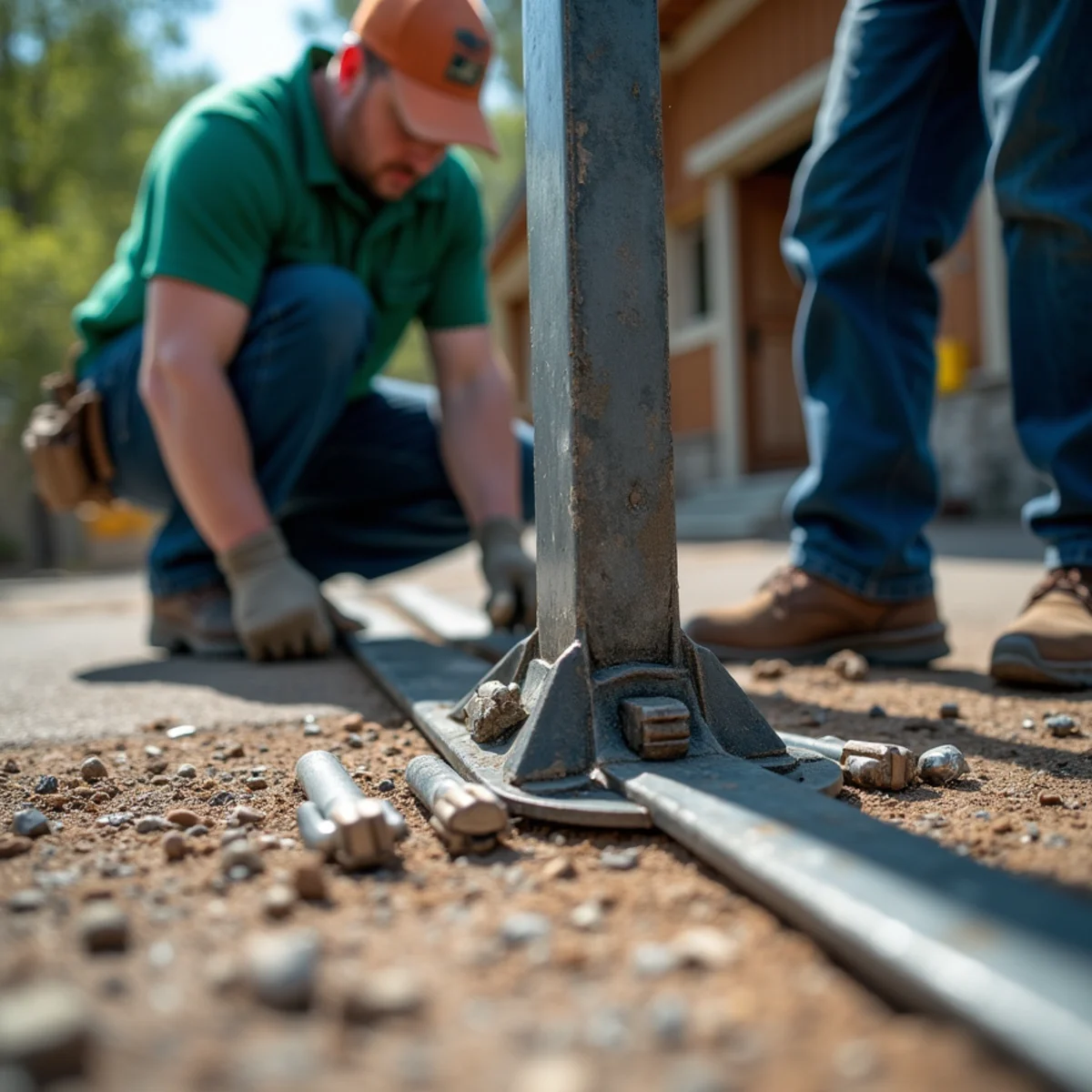
Vegetation Management: Clearing Windbreak Hazards and Overhanging Limbs
Surrounding trees and shrubs create severe secondary hazards for residential fences during high-wind events. Downed ponderosa pine branches, dead cottonwood limbs, and overgrown lilac bushes cause thousands of dollars in avoidable fence damage every spring.
Heavy tree limbs overhanging your fence line whip violently in 75-mph gusts. If a dead 4-inch branch snaps off, it will crush top rails and shatter pickets below. Trim all overhanging branches back at least 3 feet from the fence boundary.
Additionally, clear dense shrubbery and tall ornamental grasses away from the base of the fence. Dense brush traps wind, creates localized eddy currents that increase turbulence, and retains ground moisture that accelerates post rot.
Action Checklist:
- Prune tree limbs hanging within 3 feet above your fence perimeter
- Remove dead or diseased trees that could topple during a Chinook storm
- Trim heavy climbing vines (ivy, honeysuckle) that add dead weight to pickets
- Clear leaves and mulch from bottom rails to allow wind to pass cleanly
Frequently Asked Questions
Sustained winds of 50 to 60 mph will blow over fences with existing post rot or loose nails. Healthy fences built to modern standards survive 75 to 80 mph, but gusts exceeding 85 mph can damage even well-built fences if debris impacts them.