
Pool Fence Requirements in Colorado Springs | Colorado Guide
Under Pikes Peak Regional Building Department (PPRBD) rules and the International Swimming Pool and Spa Code (ISPSC), residential pool barriers in Colorado Springs must be at least 48 inches high with a maximum 2-inch bottom clearance. All access gates must open outward away from the pool, be self-closing and self-latching, with the latch release located at least 54 inches above grade.
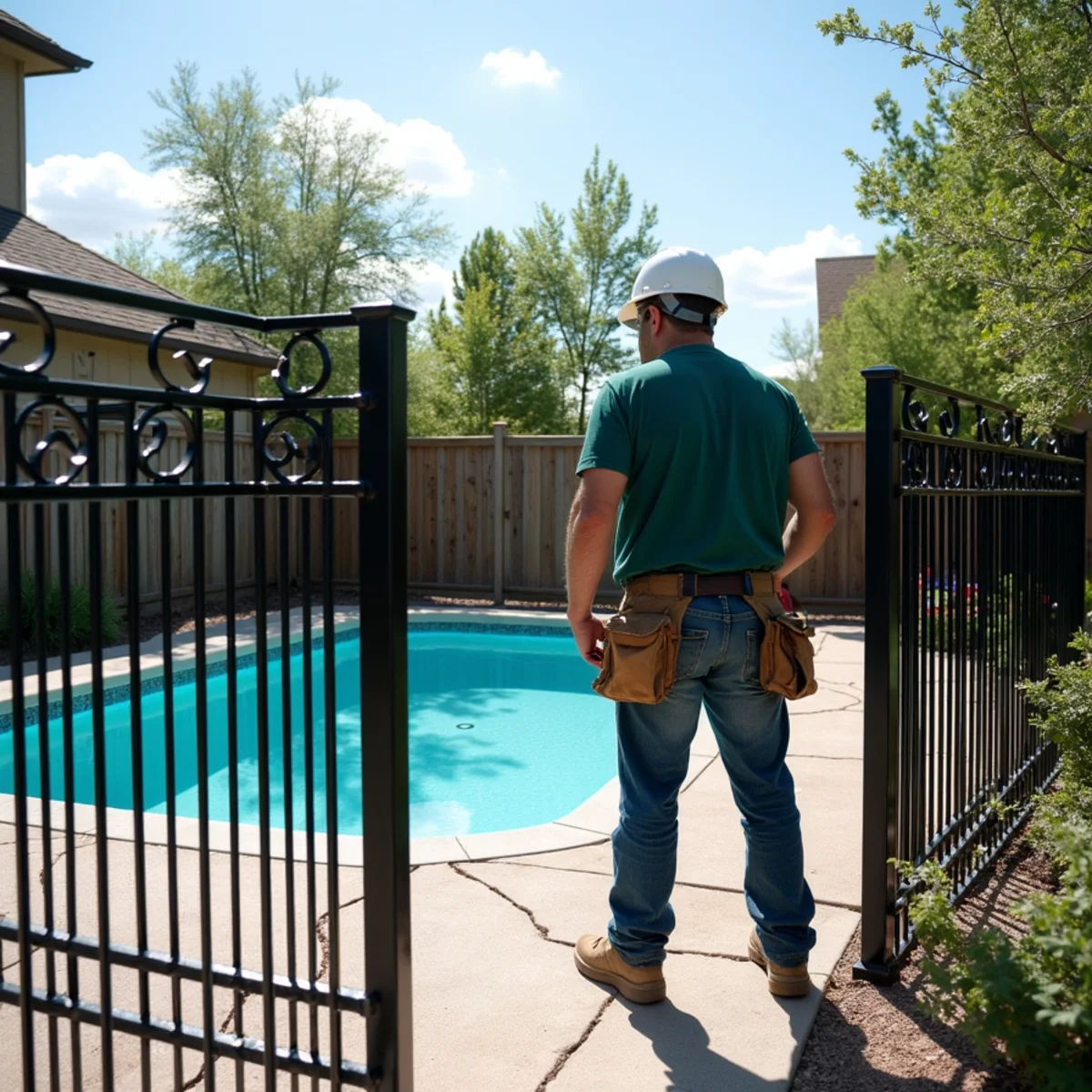
Field Insight on Horizontal Rail Spacing and Foothold Bans
The most common code violation that fails PPRBD pool barrier inspections is horizontal rail spacing on wooden privacy fences. If the horizontal 2x4 rails are spaced less than 45 inches apart vertically on the exterior side of the fence, the building code classifies them as a 'ladder foothold' that young children can climb. Horizontal rails must be located on the interior pool side.
Guide Outline: Pool Fence Requirements in Colorado Springs | Colorado Guide
- 1.Pikes Peak Regional Building Department & ISPSC Barrier Mandates
- 2.Dimensional Rules: Height Clearances, Picket Spacing, and Foothold Limits
- 3.Self-Closing, Self-Latching Gate Hardware & Outward-Swing Specifications
- 4.Permit Application Procedures and PPRBD Field Inspection Checkpoints
- 5.Material Selections for Mountain Pool Barriers: Ornamental Iron vs. Solid Cedar
- 6.Frequently Asked Questions
Pikes Peak Regional Building Department & ISPSC Barrier Mandates
Swimming pool enclosures are governed by strict life-safety building codes designed to prevent accidental pediatric drowning. In Colorado Springs and surrounding El Paso County jurisdictions (including Fountain, Monument, and Manitou Springs), building permits and barrier standards fall under the jurisdiction of the Pikes Peak Regional Building Department (PPRBD).
PPRBD enforces the International Swimming Pool and Spa Code (ISPSC) in conjunction with the International Residential Code (IRC Section AG105). Any body of water deeper than 24 inches—including in-ground swimming pools, permanent above-ground pools, swim spas, and outdoor hot tubs without an ASTM-compliant locking hard cover—must be enclosed by a code-compliant barrier.
Failing a pool barrier inspection halts final pool permit signoff, delays homeowner insurance liability coverage, and can result in municipal stop-work orders.
Questions Regarding pool fence requirements colorado springs?
Call Jeremy directly for veteran-owned technical guidance on Front Range fencing.
| Regulatory Agency | Governing Code Standard | Applies To | Key Compliance Objective |
|---|---|---|---|
| PPRBD (Regional) | PPRBD Local Amendments | All El Paso County residential parcels | Permit issuance, site plan review & inspections |
| ISPSC / IRC | ISPSC Chapter 3 / IRC Appendix G | Water features > 24 inches deep | Barrier height, picket spacing & gate latches |
| HOA Architectural Committee | Neighborhood Design Covenants | Specific subdivisions (Briargate, Cordera) | Material aesthetics & approved color finishes |
| Homeowners Insurer | Property Liability Guidelines | Underwriting risk requirements | Mandatory perimeter enclosure before coverage |
Dimensional Rules: Height Clearances, Picket Spacing, and Foothold Limits
The physical dimensions of a pool barrier are meticulously defined in building code specifications. A compliant pool fence must prevent both crawling underneath and squeezing through openings.
First, barrier height must measure minimum 48 inches (4 feet) vertically from finished grade on the exterior side facing away from the pool. At Jeremy's Fences, we frequently install 6-foot privacy fences or 5-foot ornamental iron fences to exceed the baseline code and maximize privacy.
Second, the maximum vertical clearance between the bottom of the barrier and ground grade cannot exceed 2 inches on hard surfaces (concrete or stone pavers) and 4 inches on grass or gravel. Third, vertical picket spacing cannot permit the passage of a 4-inch diameter sphere anywhere through the fence, preventing young children from wedging their heads between boards.
Action Checklist:
- Verify finished fence height is minimum 48 inches above exterior grade
- Ensure bottom ground gap does not exceed 2 inches on hardscaping or 4 inches on turf
- Confirm vertical pickets or baluster openings are spaced less than 4 inches on center
- Ensure exterior face is free of horizontal decorative protrusions that create climbing footholds
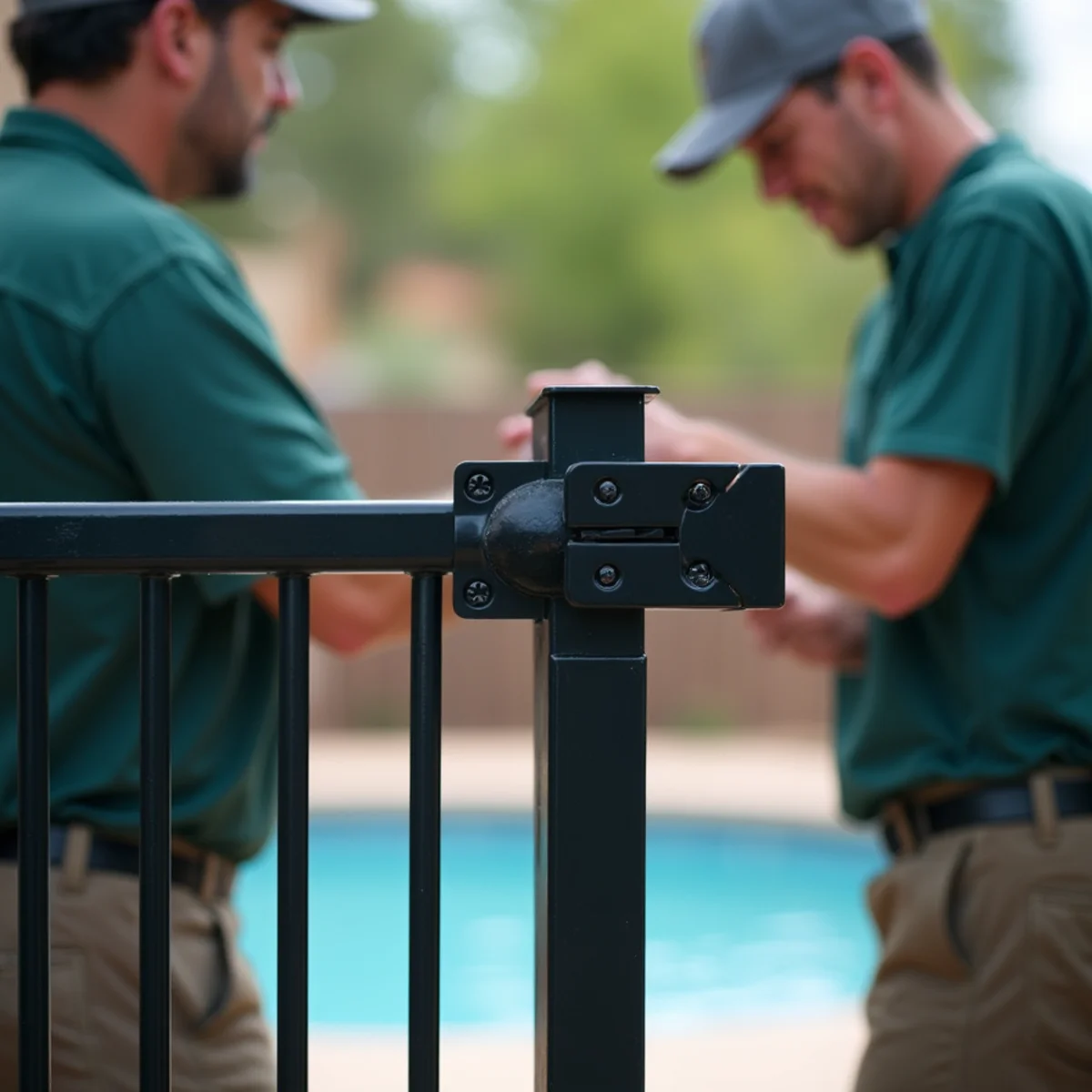
Self-Closing, Self-Latching Gate Hardware & Outward-Swing Specifications
Pool barrier gates receive the highest level of regulatory scrutiny from PPRBD field inspectors. Every pedestrian gate providing direct access to a swimming pool must satisfy three non-negotiable mechanical standards.
First, the gate must swing outward—opening away from the pool area. This ensures that if a child pushes against the exterior gate leaf, it cannot swing inward toward the water. Second, the gate must be equipped with a reliable self-closing hinge system that swings the gate shut automatically from any open position, even when opened only 2 inches.
Third, the gate must feature a magnetic self-latching device (such as the industry-standard MagnaLatch). The latch release mechanism must be positioned at least 54 inches above finished ground grade to remain out of reach of small children.
| Gate Mechanical Requirement | Code Specification | Required Hardware Type | PPRBD Field Test |
|---|---|---|---|
| Swing Direction | Must swing outward away from pool | Properly mounted hinge stop brackets | Push test from outside the barrier |
| Self-Closing Action | Automatic closure from any open angle | Adjustable tension Tru-Close hinges | Released from 6 in and fully open positions |
| Self-Latching Engagement | Must lock securely without bounce-back | Magnetic positive-engagement latch | Tested for secure capture on gentle closure |
| Latch Release Height | Minimum 54 inches above grade | Extended top-pull latch shaft | Measured with tape measure from ground level |
Permit Application Procedures and PPRBD Field Inspection Checkpoints
Securing a pool barrier permit requires submitting accurate site plans to the Pikes Peak Regional Building Department. The site plan must clearly indicate property boundaries, pool location, fence layout, gate locations, and utility easements.
Once fence construction is completed, a PPRBD building inspector conducts a mandatory on-site physical barrier inspection before the pool can be legally filled with water. The inspector will use a 4-inch test sphere to verify spacing, test self-closing gates from multiple open angles, measure bottom clearances, and verify that latch heights meet the 54-inch rule.
Jeremy's Fences manages the entire permitting and inspection workflow for our clients, guaranteeing that your installation passes PPRBD inspection on the very first visit.
Action Checklist:
- Submit dimensioned plot plan to PPRBD showing barrier perimeter and gate locations
- Coordinate Colorado 811 utility mark before post excavation begins
- Schedule final PPRBD barrier inspection prior to pool filling
- Retain official signed building inspection certificate for insurance records
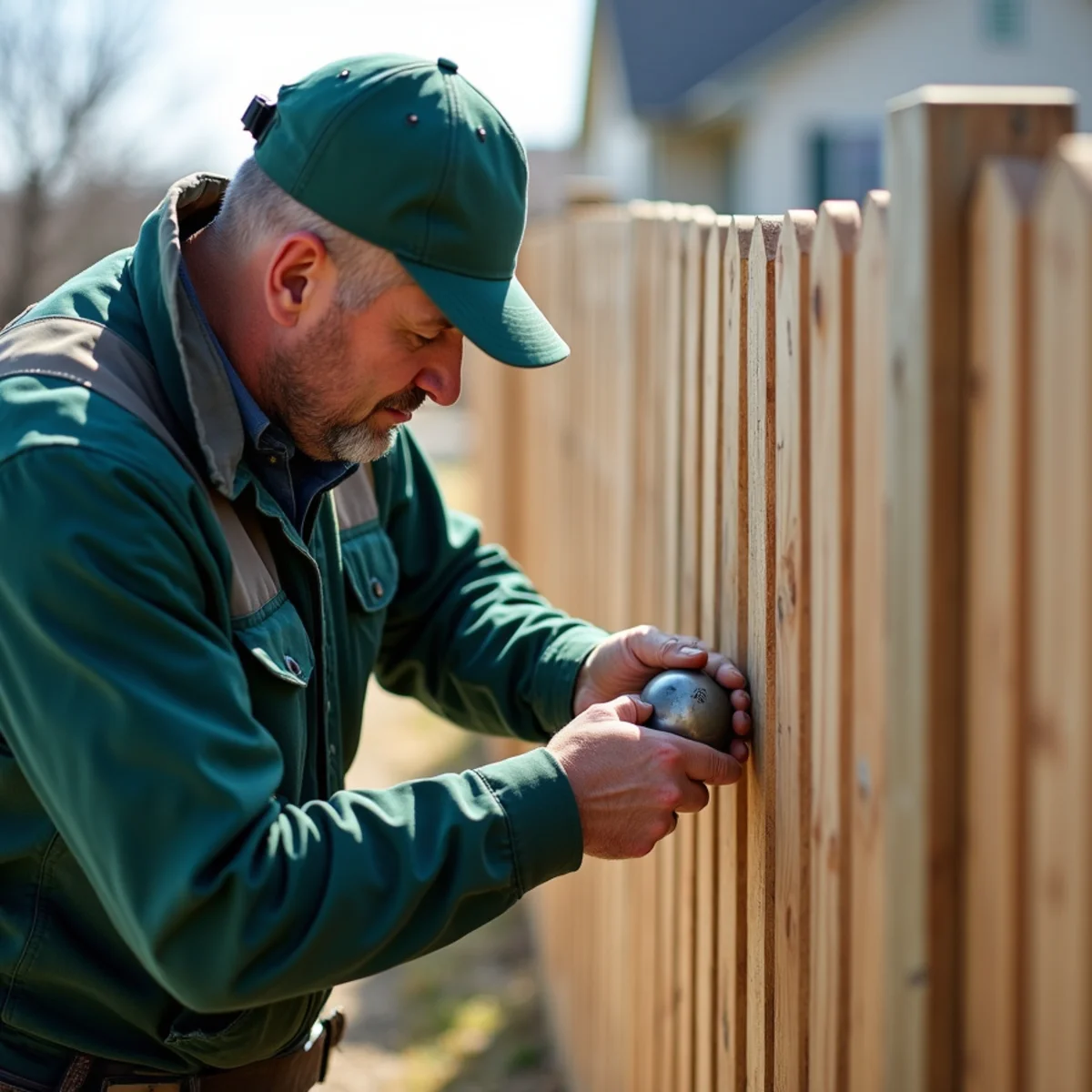
Material Selections for Mountain Pool Barriers: Ornamental Iron vs. Solid Cedar
Choosing the right material for your Colorado Springs pool fence involves balancing municipal safety compliance, aesthetic elegance, and mountain wind survivability.
Ornamental steel and aluminum fencing represent the most popular choice for pool enclosures along the Front Range. Powder-coated iron fences offer 100% compliance with ISPSC foothold rules because vertical pickets have narrow top rails, while preserving spectacular panoramic views of Pikes Peak and the Front Range foothills.
Solid Western Red Cedar privacy fencing is preferred when total seclusion from neighboring two-story homes is desired. When building wood pool fences, we place horizontal 2x4 rails on the interior pool side to eliminate exterior footholds, and specify stainless steel magnetic hardware that resists pool chemical corrosion.
Call Jeremy directly at (614) 543-4232 for an expert pool fence consultation.
| Material Type | Aesthetic Style | Wind Survivability | Maintenance Requirements | PPRBD Code Fit |
|---|---|---|---|---|
| Powder-Coated Steel/Iron | Elegant, open mountain views | 100 mph+ (zero wind resistance) | Zero; durable powder coat | Flawless ISPSC compliance |
| Western Red Cedar Privacy | Full seclusion & warmth | Requires 24-in deep footings | Staining every 3 years | Must put rails on pool interior |
| Commercial Extruded Vinyl | Clean modern appearance | Requires heavy steel post inserts | Occasional pressure washing | Smooth profile resists climbing |
| All-Glass Panel Enclosure | Luxury, unobstructed view | Requires heavy structural posts | Frequent cleaning from hard water | Must use tempered safety glass |
Frequently Asked Questions
Under Pikes Peak Regional Building Department (PPRBD) rules and the ISPSC, residential swimming pool barriers must be at least 48 inches (4 feet) tall measured from the exterior ground grade.