
Filing a Hail Damage Fence Claim in Colorado Springs
To file a fence hail claim in Colorado Springs, first review your policy's Coverage B (Other Structures) limit and deductible, typically 10% of dwelling coverage with a $1,000 to $2,500 deductible. Contact your insurer within 30 days of the storm, photograph bruised wood or shattered vinyl alongside a scale ruler, and obtain an itemized contractor replacement estimate to present during the adjuster's field inspection.
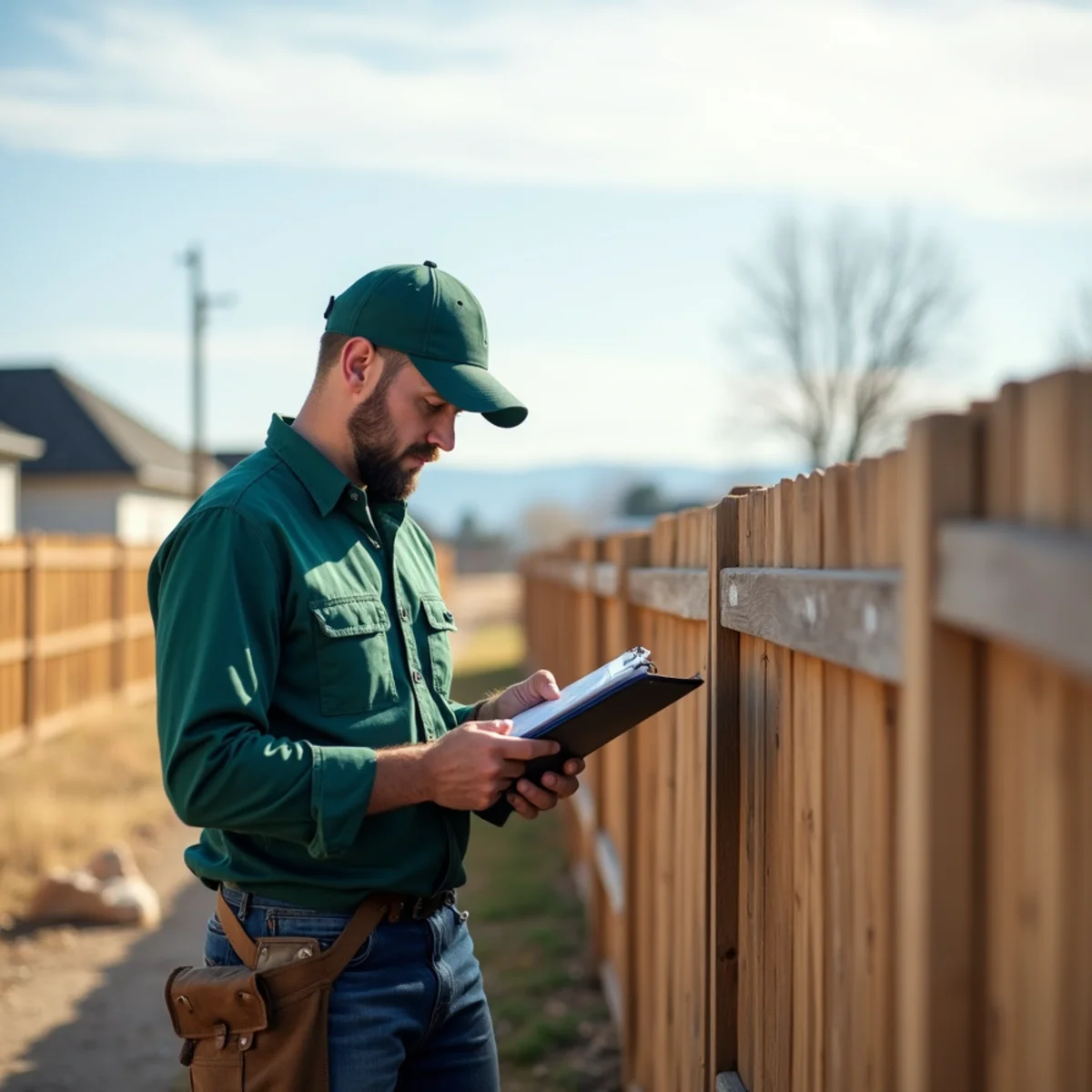
Field Insight on Adjuster 'Cosmetic Damage' Exclusions
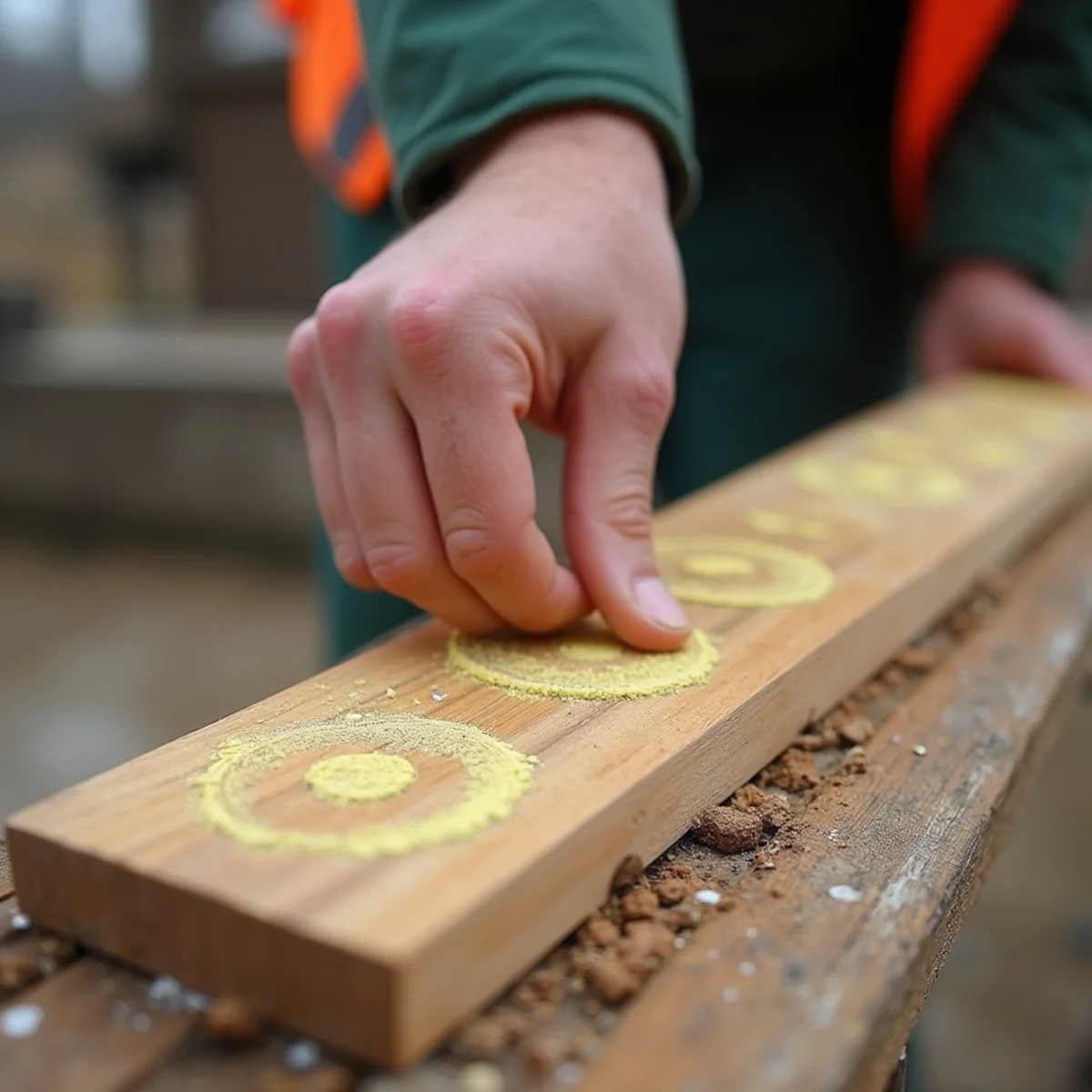
Insurance carriers increasingly attempt to deny wooden fence claims by citing 'cosmetic damage only.' However, in Colorado's high-altitude climate, crushed wood fibers are not merely cosmetic: they destroy the cedar's natural moisture barrier, inviting rapid fungal rot and board warping. Providing microscopic fiber rupture photos proves structural compromise.
Tradeoff Consideration: Bundled Claim vs. Fence-Only Claim: If hail damaged both your roof and fence, bundling them into one claim means paying only a single deductible. If only your fence was damaged and the repair estimate is $2,200 while your deductible is $2,000, filing a claim may not be worth the risk of future premium increases.
Guide Outline: Filing a Hail Damage Fence Claim in Colorado Springs
- 1.Understanding Coverage B (Other Structures) in Colorado Homeowners Policies
- 2.Navigating the Deductible Threshold: When Filing a Fence Claim Makes Sense
- 3.Actual Cash Value vs. Replacement Cost: Overcoming Depreciation Holds
- 4.Handling Discontinued Profiles and Common Boundary Neighbor Negotiations
- 5.How to Present an Itemized Contractor Estimate to the Insurance Adjuster
- 6.Frequently Asked Questions
Understanding Coverage B (Other Structures) in Colorado Homeowners Policies
Residential insurance policies in Colorado are organized into distinct coverage sections. Your primary dwelling (the house) is covered under Coverage A. Detached structures on your property—including perimeter fences, detached garages, gazebos, and storage sheds—are covered under Coverage B (Other Structures).
Typically, Coverage B provides protection equal to 10% of your Coverage A dwelling limit. For example, if your Colorado Springs home is insured for $500,000 under Coverage A, your default Coverage B limit is $50,000. This is more than sufficient to cover even the most extensive perimeter fence replacement.
Coverage B policies cover 'open perils' or named perils, which almost universally include hail, windstorms, and falling trees. However, policies specifically exclude damage resulting from long-term neglect, chronic fungal rot, or lack of routine maintenance.
Questions Regarding hail damage fence insurance claim?
Call Jeremy directly for veteran-owned technical guidance on Front Range fencing.
| Policy Component | Typical Coverage Formula | Example on $500k Home | Application to Fence Damage |
|---|---|---|---|
| Coverage A (Dwelling) | Primary structural limit | $500,000 | Covers attached decks, roof, and siding |
| Coverage B (Other Structures) | 10% of Coverage A limit | $50,000 | Dedicated pool for boundary fences, sheds, and gates |
| Standard Deductible | Fixed dollar or 1% percentage | $1,000 – $2,500 | Amount subtracted from total claim payout |
| Coverage Basis | RCV (Replacement) or ACV (Cash) | Varies by policy endorsement | Determines whether depreciation is withheld |
Navigating the Deductible Threshold: When Filing a Fence Claim Makes Sense
Before dialing your insurance carrier's claims hotline, calculate the financial math of your claim. Every property claim is subject to your policy deductible, which commonly ranges from $1,000 to $2,500 in El Paso County.
If severe hail damaged only three panels of your fence with an estimated repair cost of $1,200, and your policy deductible is $1,500, the insurance company will pay $0. Filing a claim in this scenario creates a record on your Comprehensive Loss Underwriting Exchange (C.L.U.E.) report without providing any financial recovery.
Conversely, if hail flattened or heavily pitted 180 feet of privacy fence with a replacement estimate of $7,500, filing a claim yields a net payout of $5,500 to $6,500 after your deductible. If a storm damaged your roof, gutters, and fence simultaneously, the single deductible applies across all damaged property components.
Action Checklist:
- Locate insurance policy declarations page to verify exact deductible amount
- Obtain professional contractor estimate before calling the insurer
- Inspect roof, gutters, and air conditioner to identify multi-item claim potential
- Only file if total documented damage comfortably exceeds your deductible
Actual Cash Value vs. Replacement Cost: Overcoming Depreciation Holds
Understanding the difference between Actual Cash Value (ACV) and Replacement Cost Value (RCV) is vital to receiving full reimbursement.
If your policy provides Replacement Cost Value coverage, the insurer calculates what it costs to rebuild the fence with new materials today. However, they initially issue a payment based on Actual Cash Value—withholding a portion of the funds as 'depreciation' based on the age of the old fence. For example, on a $6,000 fence claim for an 8-year-old fence, the insurer might pay $3,500 upfront (ACV minus deductible) and hold $2,500 in recoverable depreciation.
To recover the withheld depreciation, you must complete the rebuild using a licensed contractor and submit the final invoice and completion certificate. The insurer then releases the remaining depreciation funds.
| Claim Settlement Stage | What It Represents | How Funds Are Disbursed | Action Required by Homeowner |
|---|---|---|---|
| Gross Estimate (RCV) | Total cost to rebuild to modern code | Baseline reference figure | Contractor submits detailed scope |
| Less Deductible | Homeowner out-of-pocket responsibility | Subtracted from insurer payment | Paid directly to contractor |
| Less Depreciation | Value withheld based on age of old fence | Held in escrow by insurance | Recoverable upon project completion |
| Initial Payout (ACV) | Upfront check to begin work | Mailed to homeowner / mortgage co. | Used for contractor project deposit |
| Depreciation Release | Final balance paid upon completion | Issued after final invoice submitted | Submits certificate of completion |
Handling Discontinued Profiles and Common Boundary Neighbor Negotiations
Many El Paso County neighborhoods have fences constructed with specific milled picket shapes or ornamental vinyl profiles that are no longer manufactured. If storm hail destroys 60 feet of a 150-foot boundary, replacing only the damaged portion creates an irregular, mismatched perimeter that violates HOA architectural rules.
Under insurance 'line of sight' or uniform appearance principles, adjusters can be persuaded to cover the entire continuous fence run if matching materials are unavailable. Jeremy's Fences assists homeowners by documenting obsolete milling profiles and securing manufacturer discontinuation letters.
Additionally, if the fence sits on a shared boundary with a neighbor, both parties can coordinate with their respective insurers to replace the entire line seamlessly, splitting deductible obligations equitably.
Action Checklist:
- Check HOA covenants regarding uniform fence appearance and color matching
- Request lumber mill confirmation if your fence picket profile is obsolete
- Discuss shared boundary replacement with adjoining neighbors early
- Request separate itemized neighbor invoices from your contractor

How to Present an Itemized Contractor Estimate to the Insurance Adjuster
Insurance adjusters use specialized estimating software (such as Xactimate) that prices construction by specific line items: linear footage of framing, post excavation, concrete weight, waste percentage, and disposal dump fees. Submitting a vague contractor quote that simply says 'Replace fence: $6,500' almost guarantees delays and underpayment.
Jeremy's Fences prepares comprehensive, insurance-ready proposals formatted to match adjuster estimating standards. We itemize exact post counts, boring depths, board dimensions, ceramic fastener specifications, and permit requirements. We also offer on-site representation, meeting your adjuster directly at your property to walk the boundary and point out structural impacts.
Call Jeremy directly at (614) 543-4232 immediately following a storm event to get your insurance assessment started.
| Xactimate Line Item | Common Adjuster Omission | How Jeremy's Fences Protects You |
|---|---|---|
| Post Concrete Footing Excavation | Adjusters frequently omit concrete removal labor | We specify hydraulic extraction & disposal fees |
| Fastener Specification | Priced as cheap nails rather than screws | We require ceramic structural screws per local wind codes |
| Haul-Away & Dump Fees | Underestimated debris disposal costs | Itemized roll-off dumpster and transfer station fees included |
| Permit & Utility Locates | Omitted as standard contractor overhead | Formal inclusion of PPRBD permitting & locate protocols |
Frequently Asked Questions
Hailstorms are classified as 'Acts of God' or weather-related events beyond the homeowner's control. In Colorado, insurers generally cannot raise individual rates solely for filing a single weather-related claim, though regional catastrophic rate adjustments can occur across zip codes.