
How Long Does Fence Installation Take in Colorado Springs?
In Colorado Springs, a standard 150-linear-foot residential fence installation takes 2 to 4 consecutive working days on-site, with a total calendar turnaround of 7 to 14 days from contract signing. The schedule requires a mandatory 3-business-day waiting period for Colorado 811 utility locates and 24 to 48 hours for concrete post footings to cure before framing rails.
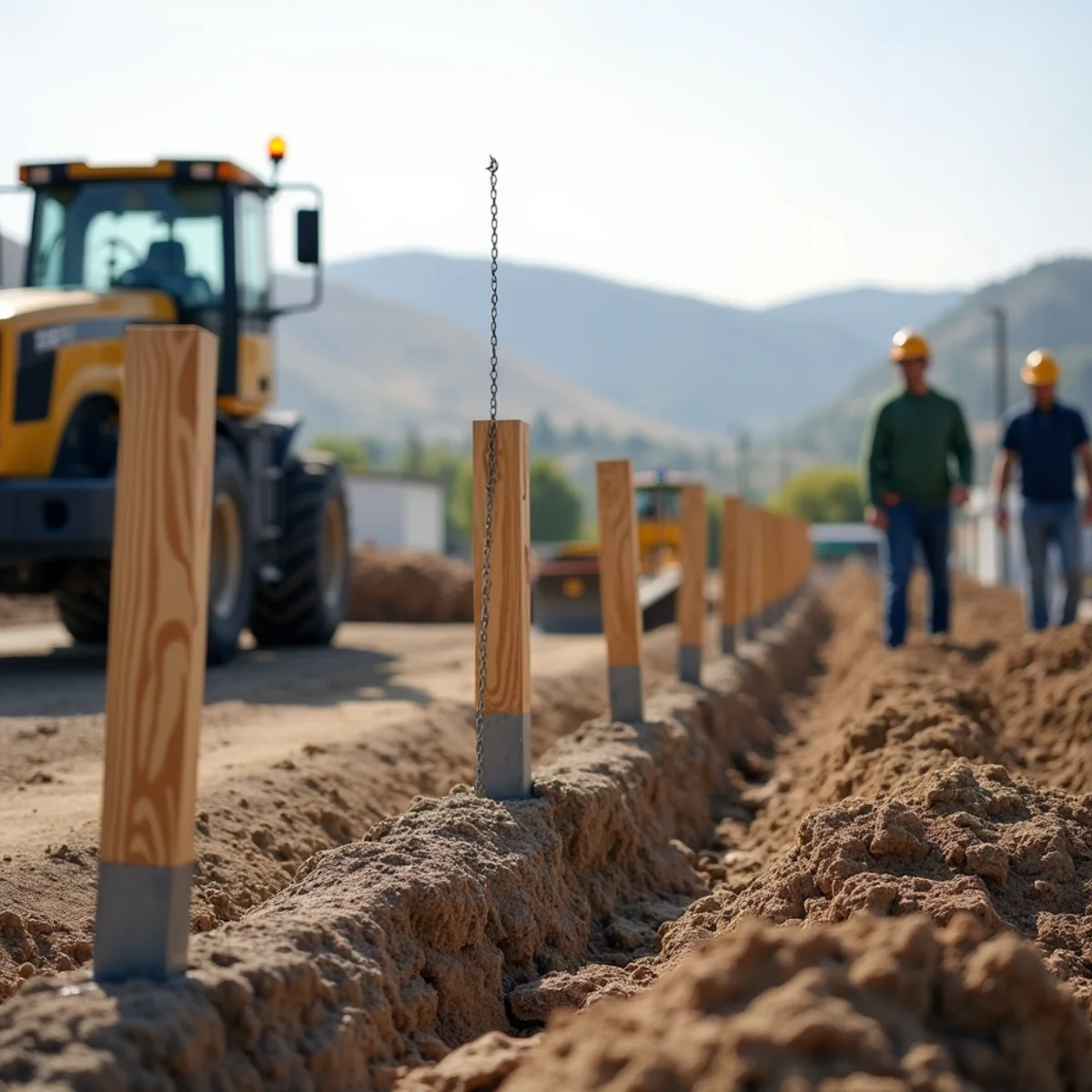
Field Insight on the 24-Hour Concrete Cure Window
Fly-by-night contractors often boast they can install a 180-foot fence in a single day by dry-pouring concrete and immediately screwing rails and pickets to the posts. Hanging 600 lbs of green lumber onto freshly poured posts creates micro-rotational torque, cracking the setting concrete and guaranteeing leaning posts within two seasons.
Tradeoff Consideration: Winter Installs vs. Spring Rush: Scheduling installation between November and February can save 5% to 10% on labor, and contractors have shorter lead times (1–2 weeks vs. 4–6 weeks in spring). However, winter projects require monitoring for frozen topsoil and occasional snow stand-downs.
Guide Outline: How Long Does Fence Installation Take in Colorado Springs?
- 1.The Front Range Installation Roadmap: Phase-by-Phase Calendar
- 2.Colorado 811 Underground Utility Locates: Mandatory Legal Wait Periods
- 3.Excavation and Concrete Curing Timeframes in Variable Mountain Weather
- 4.Framing, Picket Fastening, and Precision Gate Alignment Milestones
- 5.Weather Contingencies: Winter Ground Freeze and High-Wind Stand-Downs
- 6.Frequently Asked Questions
The Front Range Installation Roadmap: Phase-by-Phase Calendar
A high-quality fence project involves careful logistical coordination long before our installation trucks arrive at your property. Professional fencing contractors structure projects into distinct phases to ensure engineering integrity.
The overall journey spans four core phases: pre-construction site planning (laser survey, HOA design review, utility marking), subterranean excavation and footing placement, concrete cure stabilization, and structural woodwork assembly.
Understanding these distinct phases prevents unrealistic expectations and allows homeowners to plan backyard pet containment, sprinkler system shutoffs, and gate access for our heavy equipment.
Questions Regarding fence installation timeline colorado springs?
Call Jeremy directly for veteran-owned technical guidance on Front Range fencing.
| Project Phase | Calendar Timing | Key Milestones & Activities | Homeowner Participation |
|---|---|---|---|
| Phase 1: Estimating & Contract | Days 1 – 3 | Laser boundary survey, style selection, written bid | Approve proposal & sign agreement |
| Phase 2: Colorado 811 Locates | Days 4 – 7 (3 work days) | Underground gas, electric, fiber marked with spray paint | Keep gates unlocked for utility locators |
| Phase 3: Excavation & Footings | Day 8 (On-Site Day 1) | Post holes augered to 24 in, posts set, concrete poured | Keep dogs indoors, confirm boundary line |
| Phase 4: Concrete Cure Window | Day 9 (Stand-Down) | Concrete cures to 3,000+ PSI; zero stress on posts | None; posts must rest undisturbed |
| Phase 5: Framing & Gates | Days 10 – 11 (On-Site) | Horizontal 2x4 rails, cedar pickets fastened, gates hung | Final walkthrough inspection & signoff |
Colorado 811 Underground Utility Locates: Mandatory Legal Wait Periods
Under Colorado Revised Statutes (C.R.S. 9-1.5-101), excavating into the earth with mechanical augers or hand tools requires contacting Colorado 811 at least three full business days prior to breaking ground.
In Colorado Springs, residential utility lines—including high-pressure natural gas lines from Colorado Springs Utilities, primary 120/240V electric cables, municipal water mains, and high-speed fiber-optic telecommunication conduits—frequently run along rear and side property easements directly where fence posts must be anchored.
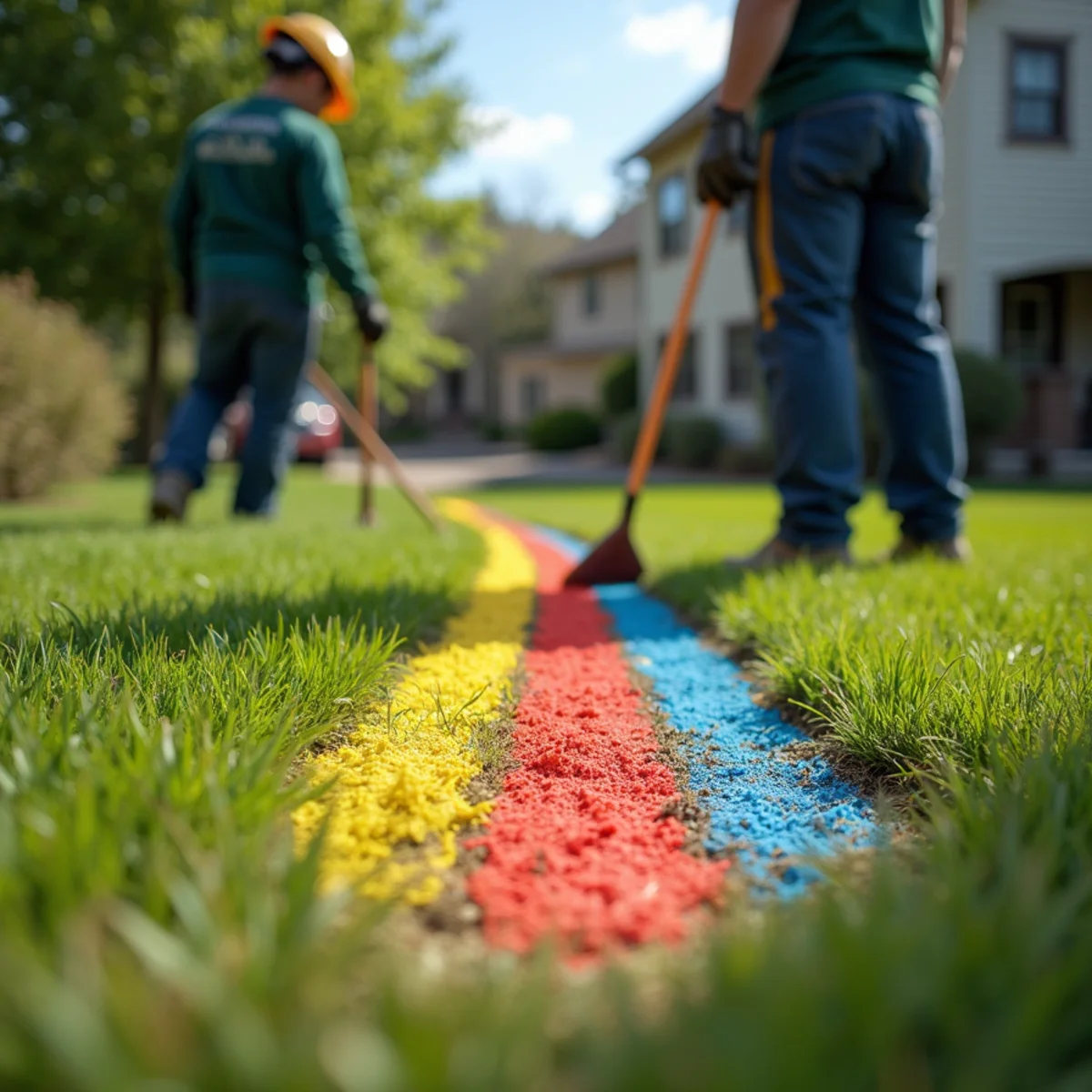
Utility locators enter your property to mark buried infrastructure using color-coded flags and spray paint (yellow for gas, red for electric, blue for water, orange for telecom). Bypassing this step risks severe electrocution, explosive gas strikes, and massive municipal repair fines.
Action Checklist:
- Contractor calls Colorado 811 minimum 3 business days before digging
- Ensure side gates remain unlocked so locators can access rear easements
- Do not remove or disturb colored utility flags or spray markings
- Identify private homeowner lines (sprinkler pipes, landscape lighting) not marked by 811
Excavation and Concrete Curing Timeframes in Variable Mountain Weather
On-site Day 1 focuses entirely on structural foundation work. Our crew arrives with hydraulic post hole augers, commercial transit levels, and masonry supplies. We bore post holes minimum 24 to 30 inches deep, penetrating past the local 20-inch frost line.
Once holes are cleaned of loose soil, structural posts are plumbed and anchored with approximately 100 lbs of commercial concrete per hole. In high-altitude Colorado air, concrete cure chemistry behaves differently depending on ambient temperature.
During warm summer months (70°F to 85°F), commercial concrete achieves initial set within 4 to 6 hours and adequate framing strength within 24 hours. During early spring or late fall when overnight temperatures drop near freezing (32°F to 40°F), we allow a full 48-hour cure window before applying the lateral load of framing rails.
| Ambient Temperature Range | Initial Set Time | Required Cure Before Framing | Cold-Weather Precautions |
|---|---|---|---|
| Warm Season (65°F – 85°F) | 2 – 4 Hours | 24 Hours | Moist-cure footing surface to prevent rapid evaporation |
| Moderate Season (45°F – 64°F) | 4 – 8 Hours | 24 – 36 Hours | Standard commercial concrete mix |
| Cold Season (32°F – 44°F) | 8 – 14 Hours | 48 Hours | Hot-water batching and calcium chloride accelerators |
| Sub-Freezing (< 30°F) | Delayed indefinitely | 72+ Hours | Insulated curing blankets over post collars |
Framing, Picket Fastening, and Precision Gate Alignment Milestones
Once the concrete footings have cured to structural capacity, our carpentry crew begins woodwork assembly. This phase moves remarkably fast and represents the most visually transformative part of the project.
We install kiln-dried horizontal 2x4 framing rails (three rails on a standard 6-foot privacy fence to prevent picket bowing). Rails are fastened using heavy-duty exterior ceramic-coated screws. Next, our carpenters hand-set Western Red Cedar pickets one board at a time, checking plumb every fourth board to ensure precision vertical lines without unsightly cumulative drift.
Custom gates are built on-site during the final hours of construction. Building gates on-site rather than using pre-fabricated shop panels ensures the gate frame precisely matches the unique post spacing and ground slope of your walkway.
Action Checklist:
- Install three horizontal 2x4 rails per 6-foot panel for maximum wind stability
- Drive ceramic star-drive screws into rails—never smooth pneumatic nails
- Check vertical picket plumb every 4 boards using a magnetic level
- Fabricate custom gate frames on-site with adjustable heavy-duty hinges
Weather Contingencies: Winter Ground Freeze and High-Wind Stand-Downs
Operating along the Front Range requires honesty regarding weather delays. Colorado Springs weather can transition from 70°F sunshine to a 6-inch blizzard within a six-hour window.
Two weather conditions require temporary project stand-downs for safety and engineering quality: high-wind storm warnings and ground freeze below 6 inches. When downslope Chinook winds exceed 40 mph, handling 8-foot privacy panels is hazardous for crew safety and creates dangerous lateral torque on setting posts. Similarly, torrential summer cloudbursts that flood open post holes require pumping water and drying before pouring concrete.
At Jeremy's Fences, we maintain transparent daily communication. If mountain weather forces a 24-hour weather pause, Jeremy notifies you immediately by phone or text with updated scheduling.
Call Jeremy directly at (614) 543-4232 to review our current installation queue and reserve your build dates.
| Weather Peril | Safety / Quality Threshold | Contractor Action | Typical Impact on Schedule |
|---|---|---|---|
| High Front Range Winds | Gusts exceeding 40 mph | Stand-down on panel assembly | 1-day pause until winds subside |
| Severe Rain / Cloudburst | Standing water in auger holes | Pump out holes & dry soil | 12 to 24-hour delay |
| Winter Ground Frost | Frozen topsoil > 6 inches | Hydraulic frost breaker teeth | Adds 2–4 hours of excavation labor |
| Heavy Snowfall | Accumulation > 3 inches | Halt framing; tarp materials | Resume after sun clears snow lines |
Frequently Asked Questions
Yes. Fencing can be installed year-round in El Paso County. Our hydraulic augers easily penetrate frozen winter topsoil, and concrete footings poured 24 inches deep below the frost line cure safely in ground temperatures that remain above freezing.