
Deer & Elk Fencing for Monument and Teller County Lots
To effectively exclude mule deer and elk on Monument and Teller County acreage, install an 8-foot-tall high-tensile woven wire game fence or reinforced heavy-timber perimeter. Mule deer can clear standard 6-foot residential fences with ease, while adult elk will physically snap light 2x4 rails; barriers require 10-foot to 12-foot treated posts set 36 inches deep in concrete.
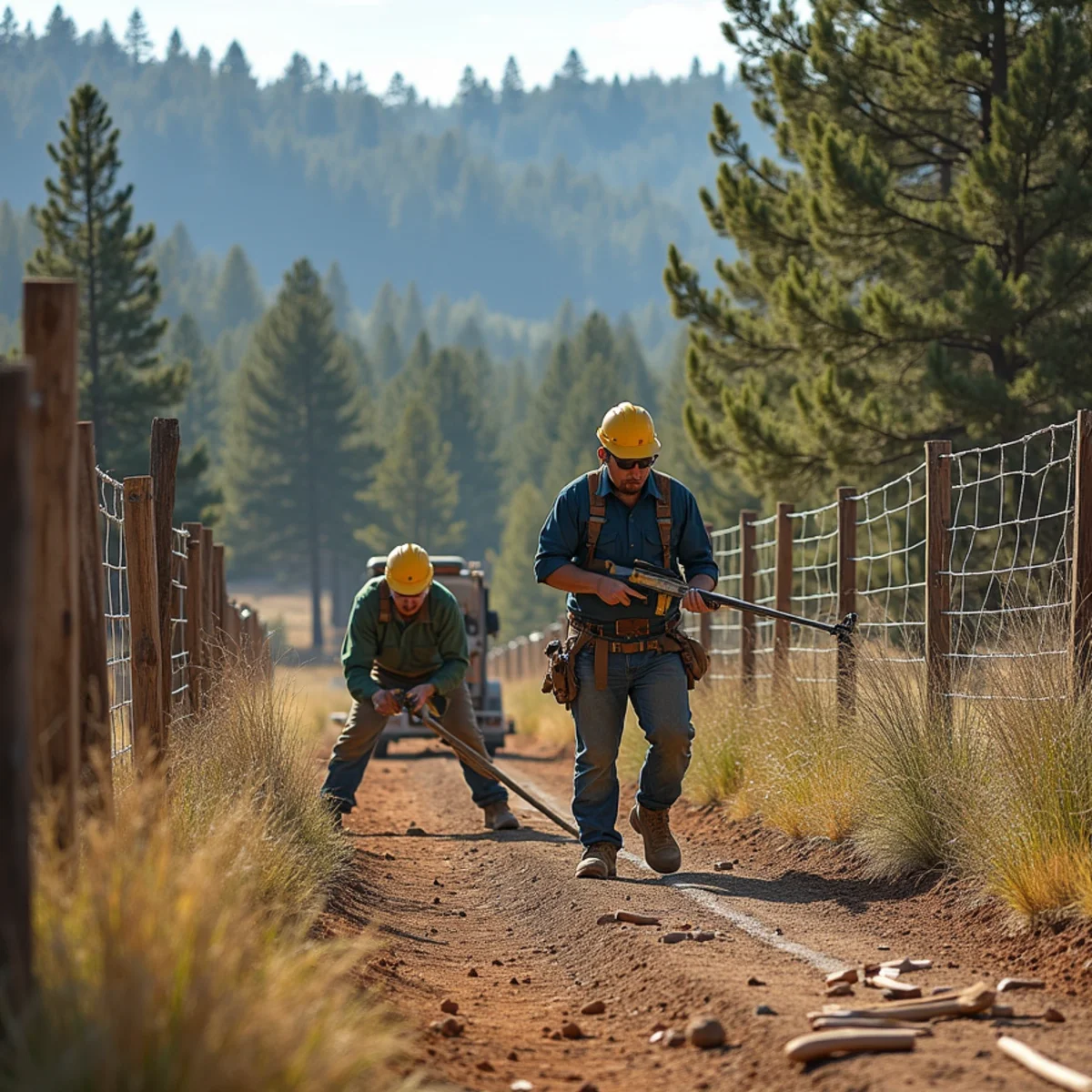
Field Insight on Rocky Mountain Elk Impact Dynamics
A mature bull elk weighs between 700 and 1,000 pounds and travels in herds. When startled, elk do not attempt high vertical leaps like white-tailed deer; they hit the fence with massive body mass. Light aluminum fences or thin wire netting will be pulverized into scrap. Exclusion fencing in Teller County requires 12.5-gauge high-tensile fixed-knot wire backed by heavy 5-inch timber corner posts.
Guide Outline: Deer & Elk Fencing for Monument and Teller County Lots
- 1.Wildlife Pressure Profiles: Mule Deer Jump Dynamics and Elk Herd Impact
- 2.Height and Structural Thresholds: Why 6-Foot Suburban Fences Fail in the Foothills
- 3.Engineered Barrier Designs: 8-Foot Woven Wire, Timber Posts, and Top Rails
- 4.Colorado Parks and Wildlife (CPW) Wildlife-Friendly Fencing Standards
- 5.Foothill Soil Anchoring: Setting Posts in Decomposed Granite and Bedrock
- 6.Frequently Asked Questions
Wildlife Pressure Profiles: Mule Deer Jump Dynamics and Elk Herd Impact
Foothill parcels north and west of Colorado Springs experience intense wildlife grazing pressure. In areas like Monument, Palmer Lake, Woodmoor, and Teller County (Woodland Park, Divide), wildlife interactions are not an occasional occurrence—they are a daily reality.
Designing an effective fence requires understanding the physical capabilities of two distinct ungulate species. Mule deer possess extraordinary vertical jumping prowess: from a stationary standing position, a mature mule deer can clear a 6-foot fence effortlessly, and will clear 7 feet when fleeing predators. Consequently, standard 6-foot suburban privacy fences are completely ineffective at protecting high-value vegetable gardens, fruit trees, or ornamental landscaping.
Rocky Mountain elk present an entirely different mechanical challenge. Elk possess immense kinetic energy. When a herd moves through a wooded draw, they will walk directly through light wire fencing, snapping posts and tangling wire around their antlers.
Questions Regarding deer elk fencing monument teller county?
Call Jeremy directly for veteran-owned technical guidance on Front Range fencing.
| Wildlife Species | Average Weight | Vertical Jump Capacity | Primary Fence Failure Mechanism |
|---|---|---|---|
| Mule Deer (Adult) | 150 – 250 lbs | Up to 8.0 Feet (standing jump) | Clears 6-ft barriers; crawls under 12-in bottom gaps |
| Rocky Mountain Elk (Bull) | 700 – 1,000 lbs | Up to 6.5 Feet (charges spans) | Snaps wooden rails; flattens lightweight posts through mass |
| Black Bear | 200 – 450 lbs | Climbs vertical timbers | Tears boards off rails to access fruit trees or trash |
| Coyote / Mountain Lion | 30 – 140 lbs | Clears 6-ft / scrambles wood | Digs under shallow bottom gaps; scrambles top rail |
Height and Structural Thresholds: Why 6-Foot Suburban Fences Fail in the Foothills
Property owners moving from urban Colorado Springs to rural acreage in Monument or Teller County often mistakenly install standard 6-foot privacy fences, expecting total protection. Within weeks, deer leap directly into the yard or elk herds break horizontal rails while browsing.
Suburban fences fail in foothill environments for three structural reasons. First, the 6-foot height is simply below the jump threshold of native mule deer. Second, standard 4x4 posts set 20 inches deep cannot withstand the heavy lateral impact of an elk herd brushing against the fence line during winter migrations.
Third, suburban privacy fencing creates a solid visual wall that catches severe foothill wind gusts, causing entire runs to blow over when heavy snowdrifts pile against the boards.
Action Checklist:
- Do not rely on standard 6-foot fences to protect orchards, gardens, or domestic pets
- Specify minimum 8-foot barrier height for complete mule deer exclusion
- Ensure corner and terminal gate posts are minimum 5-inch to 6-inch diameter heavy timber
- Select open-mesh designs that allow mountain winds and heavy snowdrifts to pass through
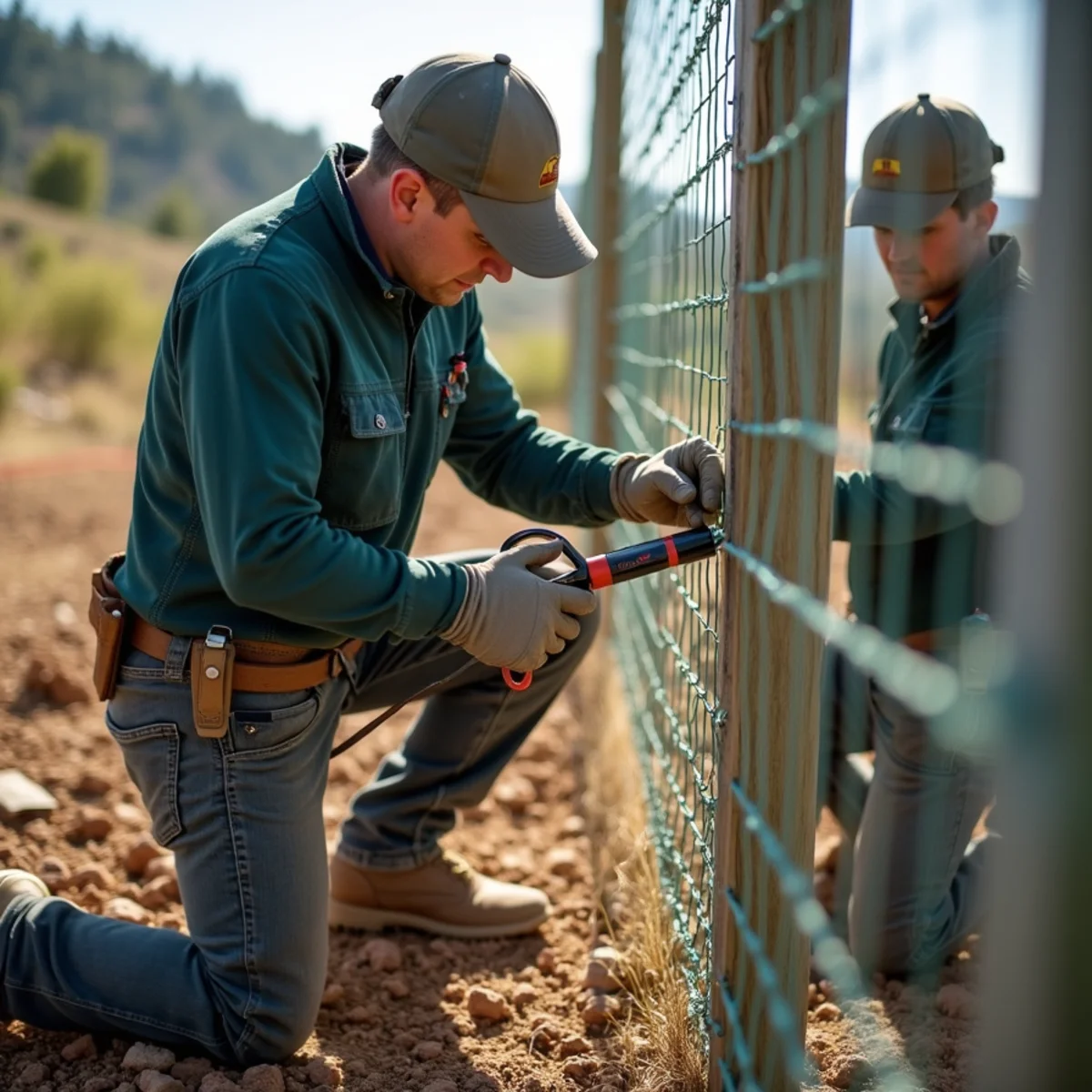
Engineered Barrier Designs: 8-Foot Woven Wire, Timber Posts, and Top Rails
The most effective, durable wildlife barrier for foothill properties is an 8-foot fixed-knot high-tensile game fence constructed with heavy pressure-treated lodgepole pine or cedar timbers.
Fixed-knot wire (such as Solidlock or Bekaert game fencing) features high-tensile 12.5-gauge steel wire where vertical and horizontal wires are locked together with a separate steel knot. This prevents the wire from separating or sagging when an animal impacts the fence. The wire grid features graduated spacing: narrow 3-inch openings at the bottom to exclude rabbits and small predators, expanding to 6-inch openings toward the top.
We mount this wire to 10-foot or 12-foot pressure-treated posts set 36 inches deep. A heavy 4-inch milled timber top rail is installed along the top edge, providing immense structural rigidity and high visual visibility so galloping elk see the barrier from a distance.
| Structural Component | Standard Suburban Spec | Foothill Wildlife Game Fence Spec |
|---|---|---|
| Fence Height | 6.0 Feet (72 inches) | 8.0 Feet (96 inches) |
| Terminal Post Spec | 4x4 Pressure-Treated Pine | 6x6 Timber or 5-in Round Lodgepole Timber |
| Post Hole Depth | 20 – 24 inches | 36 inches (deep subsoil anchor) |
| Wire / Barrier Infill | Thin hex poultry netting / pickets | 12.5-gauge High-Tensile Fixed-Knot Wire |
| Top Rail Construction | None (dog-ear picket tops) | Heavy 4-in Milled Round Timber Sight Rail |
Colorado Parks and Wildlife (CPW) Wildlife-Friendly Fencing Standards
While excluding wildlife from a vegetable garden or home curtilage is essential, enclosing vast multi-acre boundaries with impassable fencing can disrupt historical elk migration corridors and lead to horrific wildlife entanglements.
Colorado Parks and Wildlife (CPW) publishes specific 'Wildlife-Friendly Fencing' guidelines for large acreage parcels in El Paso and Teller counties. CPW recommends that large perimeter boundary fences not exceed 42 inches in height, with a minimum 16-inch clearance between the ground and the bottom wire to allow fawns and calves to crawl underneath safely.
At Jeremy's Fences, we help clients implement a hybrid strategy: installing 8-foot impenetrable game fencing around the immediate 1-acre home garden and pet yard, while utilizing CPW-compliant 3-rail split rail or smooth-wire fencing along external multi-acre boundary perimeters.
Action Checklist:
- Review CPW fencing publications for regional migration corridor awareness
- Confine 8-foot exclusion barriers to home garden, orchard, or domestic animal runs
- Ensure large perimeter fencing has a smooth bottom wire at least 16 inches above grade
- Install visual sight flags or white vinyl markers on new wire fences to alert wildlife
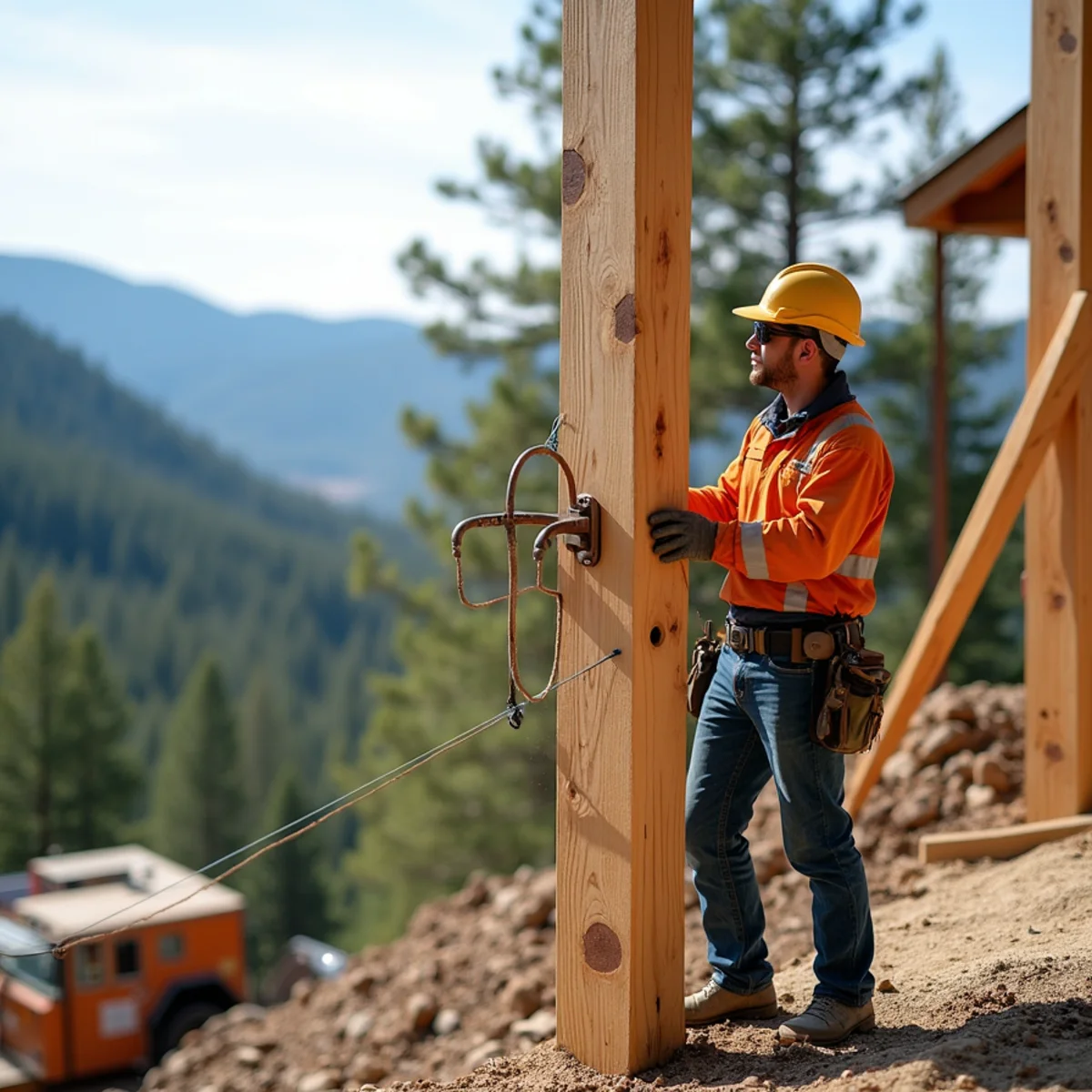
Foothill Soil Anchoring: Setting Posts in Decomposed Granite and Bedrock
Excavating post holes in Monument, Palmer Lake, and Teller County is radically different from digging in the soft soils of the Colorado Springs plains. Foothill geology is dominated by Pikes Peak granite, decomposed gravel, and shallow bedrock shelves.
Standard tractor augers will bounce off granite boulders. Setting 8-foot game fence posts requires specialized hydraulic skid-steer augers fitted with carbide rock-bullet teeth, heavy pneumatic jackhammers, and diamond-tipped rock drills.
When we encounter solid granite bedrock at 18 inches, we core-drill steel rebar pins into the bedrock and encase the post footing in high-strength 4,000-PSI commercial concrete, creating an indestructible subterranean anchor that will never shift under animal impact or mountain frost heave.
Call Jeremy directly at (614) 543-4232 to schedule a rugged terrain site survey on your foothill acreage.
| Subterranean Terrain | Excavation Tool Required | Post Anchoring Technique | Holding Power |
|---|---|---|---|
| Decomposed Granite (DG) | Carbide Bullet Auger | 24-in deep with 120 lbs concrete | High friction lateral grip |
| Glacial River Cobble | Hydraulic Jackhammer & Spud Bar | 30-in deep bell-shaped footing | Excellent frost-heave resistance |
| Solid Granite Bedrock Shelf | Diamond Core Drill & Rock Splitter | Steel dowel pinned directly into rock | Indestructible mechanical anchor |
| Black Forest Sandy Loam | Standard Mechanical Auger | 36-in deep with 100 lbs concrete | High depth compensates for loose soil |
Frequently Asked Questions
A deer exclusion fence must be at least 8 feet (96 inches) tall. Mule deer can easily clear a standard 6-foot fence from a standing position, and will jump higher if motivated by lush fruit trees or gardens.