
Cedar vs. Vinyl Fence in Colorado Springs | Homeowner Guide
In Colorado Springs, Western Red Cedar costs less upfront ($28–$48/linear ft) and provides superior wind flex and natural mountain aesthetics, but requires re-staining every 2–3 years. Commercial vinyl costs more initially ($34–$55/linear ft), requires zero staining, but has lower sub-zero impact resistance and higher panel replacement costs if damaged by hail.
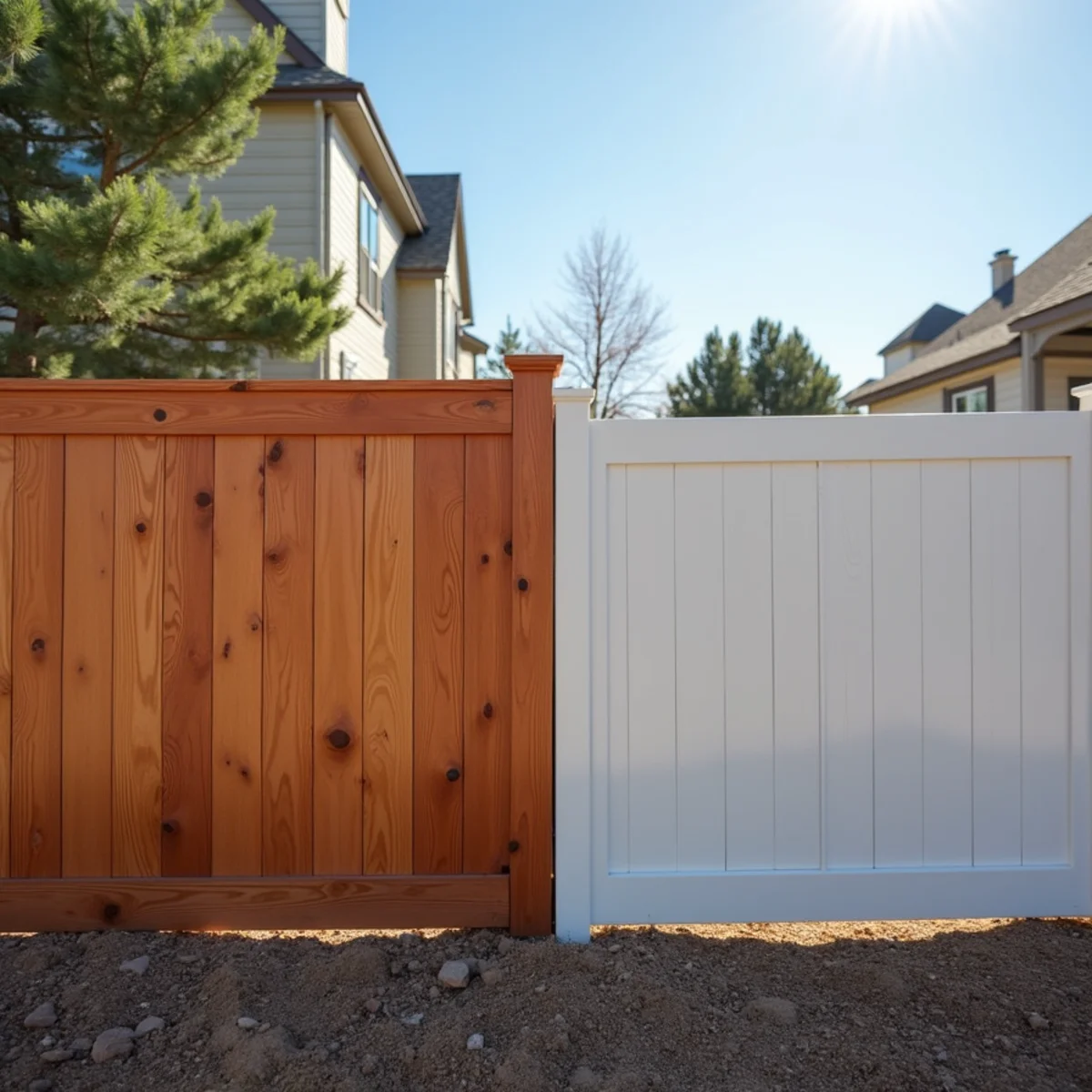
Field Insight on Chinook Wind Flex: Wood vs. Plastic
During an 80-mph downslope Chinook wind event, Western Red Cedar pickets flex naturally, distributing lateral wind load across structural framing. Vinyl panels act as rigid sails; if not reinforced with steel post inserts or internal ribbing, high winds will pop vinyl tongue-and-groove pickets out of their top and bottom rail pockets.
Guide Outline: Cedar vs. Vinyl Fence in Colorado Springs | Homeowner Guide
- 1.Material Composition: Western Red Cedar Natural Resins vs. Extruded PVC
- 2.Front Range Climate Performance: Chinook Winds, Hail, and Intense UV
- 3.Financial Analysis: Upfront Investment vs. 20-Year Total Cost of Ownership
- 4.Maintenance Realities: Staining Schedules vs. Pressure Washing Routines
- 5.Neighborhood Architectural Fit: Mountain Rustic vs. Modern Suburban Clean
- 6.Frequently Asked Questions
Material Composition: Western Red Cedar Natural Resins vs. Extruded PVC
Understanding the fundamental material differences between Western Red Cedar and extruded polyvinyl chloride (PVC) is essential to choosing the right perimeter barrier for your El Paso County property.
Western Red Cedar is an organic softwood harvested from sustainable Pacific Northwest forests. Cedar contains natural extractive compounds called thujaplicins and polyphenols, which give the wood its distinct aromatic fragrance while providing natural resistance against insect infestation and fungal rot without chemical treatment. Cedar has exceptional dimensional stability, resisting warping in dry climates.
Commercial vinyl fencing is manufactured from rigid PVC compounded with impact modifiers and titanium dioxide. Quality virgin vinyl will never rot, split, peel, or harbor mold. However, vinyl cannot be refinished; the color you install is the permanent color for the life of the fence.
Questions Regarding cedar vs vinyl fence colorado springs?
Call Jeremy directly for veteran-owned technical guidance on Front Range fencing.
| Material Characteristic | Western Red Cedar Privacy | Commercial Co-Extruded Vinyl |
|---|---|---|
| Raw Material Source | Organic harvested timber | Engineered thermoplastic polymer (PVC) |
| Natural Rot Resistance | High (natural cedar tannins) | Immune (zero organic rot potential) |
| Dimensional Stability | High (minimal shrink/swell in dry air) | High thermal expansion (moves with temp) |
| Aesthetic Appearance | Warm, organic mountain grain | Clean, modern, crisp architectural lines |
| Environmental Footprint | Renewable, carbon-sequestering | Petroleum-derived; recyclable |
Front Range Climate Performance: Chinook Winds, Hail, and Intense UV
The Front Range climate is uniquely severe on exterior building envelopes. How do cedar and vinyl compare when subjected to Colorado's three primary weather perils?
In high winds (70+ mph Chinook events), Western Red Cedar has superior tensile shear strength. When screwed to framing rails with ceramic fasteners, cedar flexes slightly under pressure without failure. Vinyl fencing requires heavy internal steel post stiffeners along wind-exposed runs to prevent rail pockets from tearing.
During summer hailstorms, 1.5-inch hailstones will dent cedar wood fibers, but rarely cause structural failure. Conversely, cold vinyl struck by large hail can suffer brittle star-fractures and puncture holes. However, in intense UV sun, properly formulated vinyl with titanium dioxide never fades, whereas cedar turns gray unless stained regularly.
| Climate Peril | Western Red Cedar Performance | Commercial Vinyl Performance |
|---|---|---|
| 80-mph Chinook Winds | Superior flex; structural shear strength | Requires steel post stiffeners to resist racking |
| Golf Ball to Baseball Hail | Surface fiber bruising; easily blended | Risk of brittle puncture / star-fracture |
| 6,000+ Ft UV Radiation | Requires staining every 2–3 years | Zero fading if formulated with 10 phr TiO2 |
| Sub-Zero Winter (-15°F) | Maintains full impact tolerance | Becomes brittle; sensitive to snowplow shock |
Financial Analysis: Upfront Investment vs. 20-Year Total Cost of Ownership
Evaluating fence cost strictly on initial contract bid provides an incomplete financial picture. You must account for ongoing maintenance expenses over a 20-year ownership horizon.
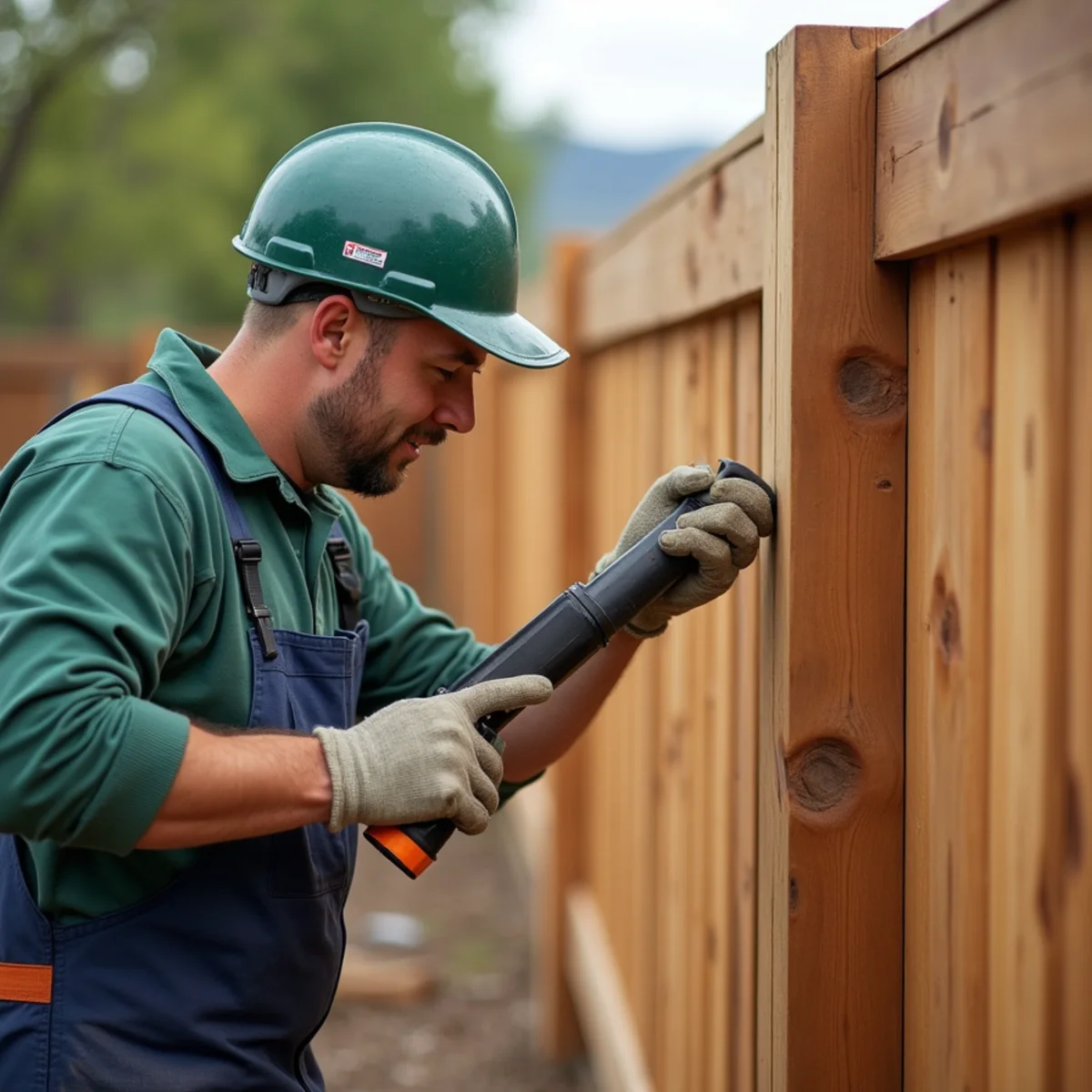
Western Red Cedar carries a lower initial installation cost ($4,500 to $7,200 for an average 150-linear-foot yard). However, cedar requires professional pressure washing and re-staining every 2 to 3 years, averaging $800 to $1,200 per application. Over 20 years, routine staining adds $5,000 to $7,000 in maintenance expenses.
Vinyl commands a higher initial price ($5,100 to $8,250 for 150 feet), but requires zero staining or painting. Over 20 years, vinyl maintenance consists entirely of an occasional $0 garden hose washdown, resulting in a lower total cost of ownership over two decades.
| Cost Category (150-ft Run) | Western Red Cedar Privacy | Commercial Virgin Vinyl |
|---|---|---|
| Initial Installed Cost | $4,500 – $7,200 | $5,100 – $8,250 |
| Yearly Maintenance Routine | Periodic inspection & screw check | Occasional garden hose rinse |
| Staining Costs over 20 Years | $5,000 – $7,000 (6–7 cycles) | $0 (never stained or painted) |
| Total 20-Year Investment | $9,500 – $14,200 | $5,100 – $8,500 |
| Cost per Year of Service | ~$475 – $710 / year | ~$255 – $425 / year |
Maintenance Realities: Staining Schedules vs. Pressure Washing Routines
How much weekend labor do you want to devote to your perimeter fence? Your personal maintenance tolerance should heavily influence your material selection.
Owning a cedar fence requires dedication to wood care. You must test the finish with the water drop test every spring, clear snowdrifts in winter, and stain every 2 to 3 years. For homeowners who enjoy maintaining their property, a freshly stained cedar fence provides unmatched curb appeal and warmth.
If you prefer zero maintenance, vinyl is the clear winner. You never pick up a stain brush, scrape flaking paint, or replace rotted boards. Once or twice a year, simply rinse off dust with a garden hose and mild dish soap to keep the fence looking brand new.
Action Checklist:
- Cedar: Budget for professional staining or DIY application every 24 to 36 months
- Cedar: Keep sprinkler heads aimed away from boards to prevent black mold stains
- Vinyl: Wash with garden hose and soft car-wash sponge annually to remove dust
- Vinyl: Keep weed trimmers and snowblowers clear of brittle bottom rails
Neighborhood Architectural Fit: Mountain Rustic vs. Modern Suburban Clean
Finally, consider the architectural character of your neighborhood and HOA design covenants. Colorado Springs features diverse aesthetic neighborhoods.
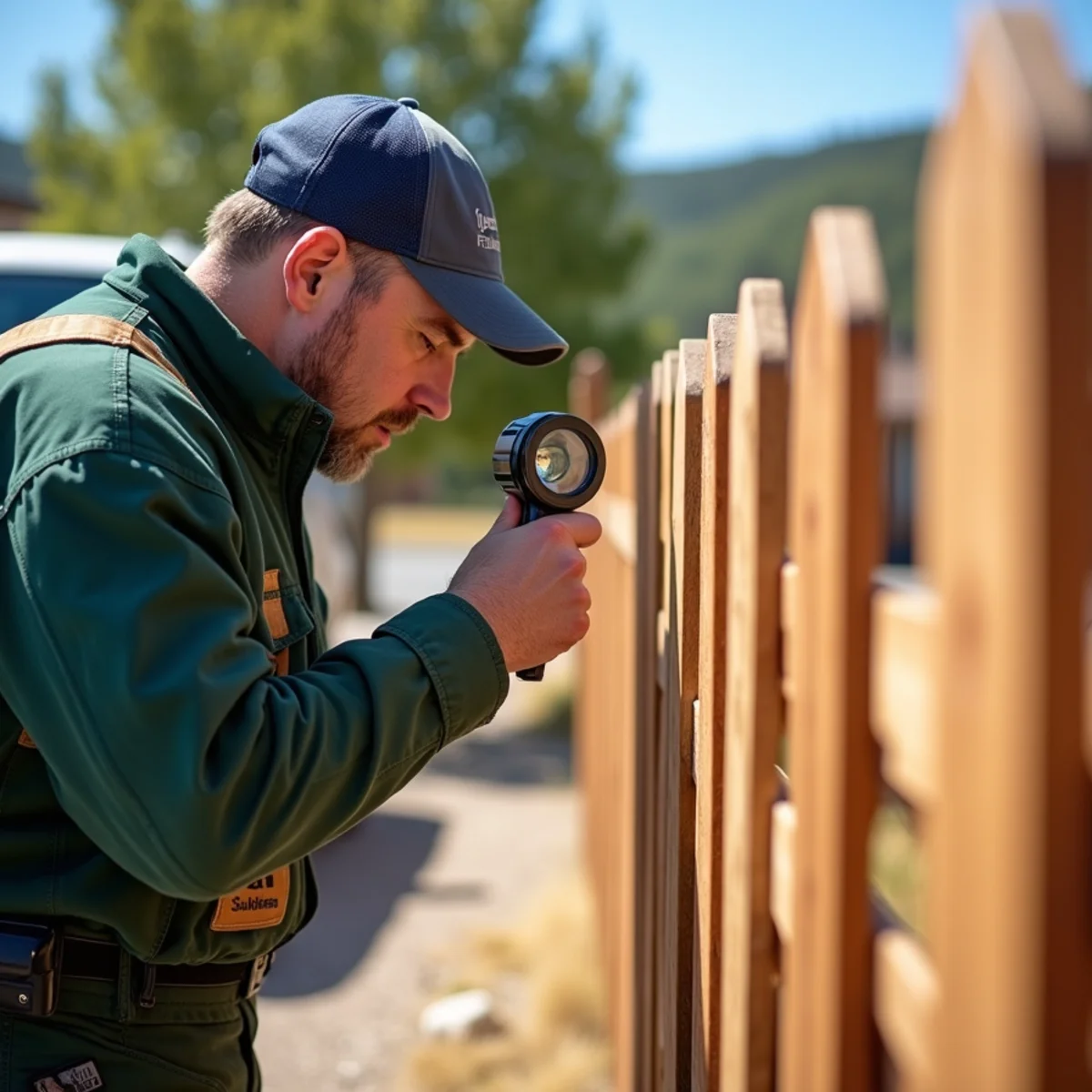
In rustic foothill communities like Rockrimmon, Broadmoor, Cheyenne Mountain, and Monument, natural Western Red Cedar blends harmoniously with native ponderosa pines, scrub oak, and red sandstone rock formations. Many mountain HOAs explicitly prohibit vinyl fencing to preserve rustic natural aesthetics.
In modern master-planned communities across northern and eastern Colorado Springs—including Briargate, Cordera, Wolf Ranch, and Banning Lewis Ranch—vinyl fencing is the dominant architectural standard, prized for its clean lines, uniform appearance, and low maintenance.
Call Jeremy at (614) 543-4232 to review material samples and get an honest, expert recommendation.
| Colorado Springs Neighborhood Type | Dominant Architecture | Recommended Material Fit |
|---|---|---|
| Foothills / Westside / Mountain Shadows | Rustic custom, heavy ponderosa pines | Western Red Cedar with steel posts |
| Master-Planned (Briargate, Cordera) | Modern suburban, HOA standards | Commercial Virgin Vinyl (White/Almond) |
| Acreage (Falcon, Black Forest) | Rural horse properties, open terrain | Cedar Split Rail / High-Tensile Mesh |
| Historic Central (Old Colorado City) | Victorian, craftsman bungalows | Western Red Cedar or Ornamental Iron |
Frequently Asked Questions
Commercial vinyl lasts 30+ years because it never rots, while Western Red Cedar lasts 20 to 25 years when properly maintained and stained every 2 to 3 years.